Nikhil Prasad Fact checked by:Thailand Medical News Team Jan 27, 2026 8 months, 1 week, 5 days, 13 hours, 25 minutes ago
Medical News: A new scientific study has found that subtle changes in the eyes may help doctors better understand and distinguish Parkinson’s disease from other similar brain disorders, offering hope for earlier and more accurate diagnosis using a simple eye scan.
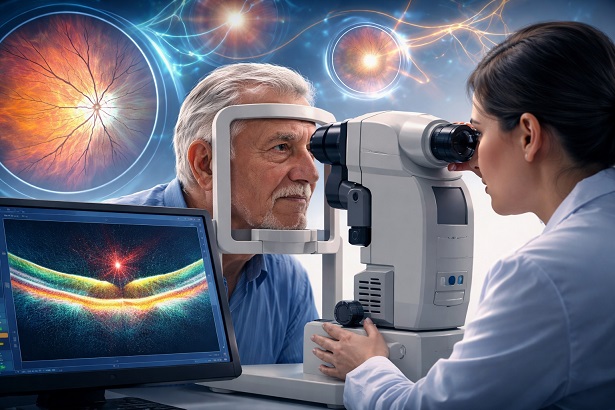 Advanced eye scans show how subtle retinal thinning may help doctors detect and distinguish Parkinson’s disease
and related brain disorders earlier.
A Growing Diagnostic Challenge
Parkinson’s disease affects millions worldwide and is best known for symptoms such as tremors, stiffness, and slowed movement. However, doctors often struggle to clearly tell it apart from related conditions known as atypical parkinsonian syndromes, especially multiple system atrophy and progressive supranuclear palsy. These disorders share overlapping symptoms, particularly in early stages, making misdiagnosis common even in specialist centers.
Why The Eyes Matter
The retina, a thin layer of nerve tissue at the back of the eye, is directly connected to the brain. Because of this close link, scientists believe that changes in brain health may also show up in the retina. Using a non-invasive imaging method called optical coherence tomography, researchers can measure the thickness of different retinal layers in remarkable detail. This
Medical News report highlights how such measurements may serve as valuable biological clues.
How The Study Was Conducted
Researchers from several leading Serbian institutions carried out a cross sectional study involving people with Parkinson’s disease, multiple system atrophy, progressive supranuclear palsy, and healthy volunteers. The institutions included the University Clinical Center of Serbia, the Faculty of Medicine at the University of Belgrade, the Institute of Epidemiology at the University of Belgrade, and the Military Medical Academy in Belgrade.
Participants underwent detailed eye examinations, focusing on retinal nerve fiber layers, ganglion cell layers, and various regions of the macula, which is responsible for sharp central vision.
Key Findings
The study found that people with Parkinson’s disease and progressive supranuclear palsy had thinning in a key retinal layer called the ganglion cell inner plexiform layer, while this layer appeared relatively preserved in multiple system atrophy. Another layer, the retinal nerve fiber layer, was thinner in all patient groups compared to healthy individuals, with the most severe thinning seen in progressive supranuclear palsy.
Importantly, almost all regions of the macula were thinner in patients than in healthy controls. However, one specific area known as the outer nasal segment remained relatively unchanged, helping researchers distinguish healthy eyes from diseased ones. Differences in retinal thickness were also noted between Parkinson’s disease and progressive supranuclear palsy, suggesting eye scans may help tell these two conditions apart.
&l
t;br />
Why These Results Matter
These findings suggest that eye scans could become a practical and affordable tool to support doctors in diagnosing and differentiating Parkinson’s related disorders. Since optical coherence tomography is quick, painless, and widely available, it holds promise as a future screening or monitoring method.
Conclusion
Overall, the study strongly supports the idea that Parkinson’s disease and related conditions affect the retina in distinct ways. While eye scans alone cannot yet provide a definitive diagnosis, the consistent patterns of retinal thinning observed suggest they could play a meaningful supporting role in clinical practice. With further large-scale research, retinal imaging may eventually help detect disease earlier, guide treatment decisions, and reduce misdiagnosis, offering real benefits to patients and caregivers alike.
The study findings were published in the peer reviewed journal: Biomedicines.
https://www.mdpi.com/2227-9059/14/1/249
For the latest on Parkinson’s Disease, keep on logging to Thailand
Medical News.
Read Also:
https://www.thailandmedical.news/articles/ophthalmology-(eye-diseases)
https://www.thailandmedical.news/articles/alzheimer,-dementia-




 Share
Share
 Tweet
Tweet
 Share
Share