Nikhil Prasad Fact checked by:Thailand Medical News Team Dec 15, 2025 9 months, 3 weeks, 3 days, 6 hours, 22 minutes ago
Medical News: A terrifying new reality is emerging for millions of people recovering from the coronavirus, as scientists uncover evidence that the virus leaves a lasting imprint not just on general health, but on the very way human genes operate. A massive international collaboration has confirmed that the virus fundamentally reprograms the host immune system. This groundbreaking investigation was led by researchers from the National and Kapodistrian University of Athens and Tzaneio General Hospital in Greece, working alongside experts from the University of Milan and IRCCS San Raffaele in Italy, the Universitat de Barcelona in Spain, Radboud University in the Netherlands, and the University of Bonn in Germany. Their combined efforts revealed that the biological aftermath of the infection is far more complex and deeply rooted than previously feared.
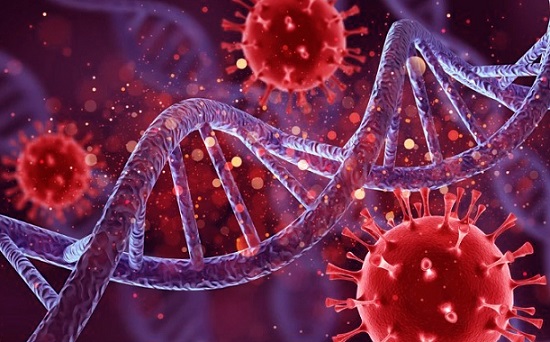 New international study reveals COVID-19 reprograms genetic switches and causes persistent immune
dysregulation
Five Distinct Types of Misery
The scientists discovered that Long COVID, or Post-Acute COVID-19 Syndrome (PACS), is not a single uniform condition but rather a complex spectrum of suffering. Through rigorous analysis, they identified five distinct "phenotypes" or clinical types. While some patients primarily endure neurological issues like brain fog and memory loss, others are crushed by debilitating fatigue. A significant group battles severe respiratory problems, such as difficulty climbing stairs or needing rest during simple daily activities. Many unfortunates face a "mixed" phenotype, battling neurological, respiratory, and fatigue symptoms simultaneously.
In this
Medical News report, the data highlights that roughly 60 percent of the patients assessed in the discovery cohort still suffered from these persistent, life-altering symptoms fully six months after their initial infection.
Immune System in Chaos
By analyzing blood samples with sophisticated techniques, the team found a chaotic and dysregulated immune landscape. Even months after apparent recovery, the body remains in a state of high alert. Distinct immune pathways involving Interleukin-1 (IL-1) and IL-17 cytokines were found to be dangerously overactive. Curiously, the body also ramps up anti-inflammatory markers in a desperate, paradoxical attempt to control the damage. This creates a confusing state where the immune system is simultaneously aggressive and suppressed, unable to return to a healthy baseline.
Rewired Genetic Switches
The most striking and disturbing discovery involved patients with the respiratory phenotype—those struggling to breathe months later. Their bodies showed massive upregulation of IL-1, a potent inflammatory molecule. Even more alarming, the study found changes at the genetic level. Using advanced RNA sequencing and ChIP-seq technology, scientists observed alterations in the "epigenome"—the chemical switches that turn genes on or off.
Specific genes related to inflammation and cell death, such
as COTL1 , TRPM2 , BAK1 , and AQP1 , were found to be forced into overdrive. This effectively reprograms the immune cells to stay aggressive, leaving a biological "scar" on the patient's DNA regulation. These genes are associated with the maturation of inflammatory proteins, explaining why the inflammation in these patients simply refuses to subside.
A Path Toward Treatment
Despite the grim findings, the study offers a glimmer of hope. The clinical data suggested that patients who had received specific anti-inflammatory treatments like anakinra or dexamethasone during their acute infection phase were significantly less likely to develop these chronic lung issues later. This points toward potential preventative strategies that could protect future patients from developing these long-term genetic scars.
The researchers concluded that the virus causes heterogeneous long-term damage driven by specific biological mechanisms at the DNA, transcriptomic, and protein levels. They emphasize that because different patients have different immune signatures—like the specific IL-1 spike in lung sufferers—future treatments cannot be one-size-fits-all. Instead, therapies must be tailored to the specific immune and genetic profile of the individual patient to effectively reverse this persistent and damaging dysregulation.
The study findings were published in the peer reviewed journal: Clinical Immunology.
https://www.sciencedirect.com/science/article/pii/S1521661625002311
For the latest COVID-19 news, keep on logging to Thailand
Medical News.
Read Also:
https://www.thailandmedical.news/articles/coronavirus
https://www.thailandmedical.news/articles/long-covid




 Share
Share
 Tweet
Tweet
 Share
Share