Nikhil Prasad Fact checked by:Thailand Medical News Team Dec 14, 2025 9 months, 3 weeks, 4 days, 10 hours, 49 minutes ago
Medical News: Public frustration is rising across many countries as the current flu season unfolds alongside the spread of a newly mutated H3N2 K clade strain that appears to differ antigenically from the strain used in most 2025–2026 Northern Hemisphere influenza vaccines. Many members of the public are openly questioning why health authorities continue recommending seasonal flu vaccination when infections, hospitalizations, and even deaths are being reported among vaccinated individuals. The debate has intensified on social media as why some doctors, hospitals and health officials (possibly with vested interest or are discreetly on the payroll of big pharma) are making claims that while these flu vaccines do not prevent getting infected with the new flu strain in circulation, these prevent disease severity, make hospital stays shorter and prevent deaths despite the fact there is no peer revived randomized clinical trials or strong scientific data that proves these claims!
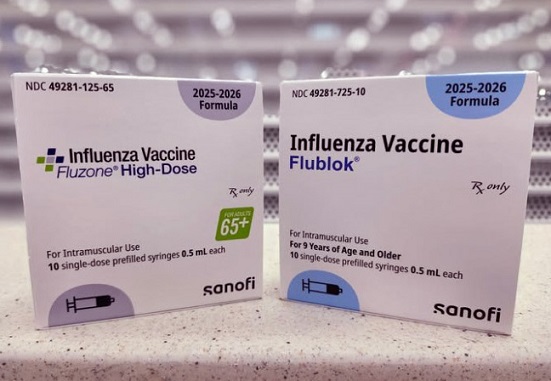 A growing global debate questions flu vaccine relevance amid the rise of a mutated H3N2 strain
and increasing breakthrough infections
At the heart of this debate lies a genuine scientific issue known as antigenic drift. Influenza viruses, particularly H3N2, mutate rapidly. Small genetic changes can alter the virus surface proteins that vaccines are designed to recognize, potentially reducing the ability of antibodies generated by vaccination to block infection. This reality has long been acknowledged by virologists and vaccine developers, yet it rarely features prominently in public messaging during annual vaccination campaigns.
Understanding the H3N2 K Clade Mismatch Issue
The H3N2 subtype has historically been the most problematic influenza strain for vaccine design. The newly dominant K clade shows multiple mutations compared to the earlier A H3N2 strain selected for inclusion in the current vaccine formulation. Laboratory antigenic mapping and neutralization studies indicate that antibodies induced by the vaccine may bind less efficiently to this mutated virus. As a result, protection against infection or mild illness may be significantly reduced.
This to large degree shows that these flu vaccines being peddled are actually obsolete. Even the T-cell mediated immunity that is induced by vaccines are typically specified to the pathogen being targeted and does not confer a broad-spectrum protection.
However, this nuance is often lost in public health messaging, leading many people to assume vaccination should prevent infection entirely and disease severity and giving the masses a false hope.
Claims About Reduced Severity and Hospitalization
Health authorities such as the WHO, CDC, and regional agencies in Europe continue to emphasize that even with a mismatch, flu vaccines reduce disease severity, hospitalization duration, and mortality risk, particularly among children, older adults, pregnant women, and those with chronic illness.
Current observational data from multiple regions show that these current flu vaccines are really not working as many are still hospitalized despite receiving these vaccines and this is one fact that is being hidden by many agencies and entitie
s including the NHS and UKHSA etc. They are concealing such data while pushing these obsolete vaccines and making claims that many of the infected are those who did not receive the vaccines. Many of these officials who should be investigated, are receiving either monies or benefits from certain of the big pharma companies involved in these vaccines and the same can be said of certain officials at the ECDC and WHO etc. Many journalists and media are also not delving deeper into this subject as either they or are their companies are receiving monies from government agencies which are in turn receiving monies from the concerned pharma giants.
To date there are no peer reviewed randomized controlled trials or real scientific data that shows these current vaccines prevent disease severity, prevent longer hospital stays or prevent deaths against the current circulating predominant H3N2 mutated flu strain
Breakthrough Infections and Public Perception
Reports of vaccinated individuals becoming infected and even hospitalized are contributing to public mistrust. There has been a lot of breakthrough infections and many who have been vaccinated have developed disease severity, needing hospitalizations. There have also been cases of pediatric deaths and also deaths among the elderly from the current H3N2 flu despite being vaccinated.
This
Medical News report underscores the fact that there is no real scientific data that these influenza vaccines are reducing disease severity as claimed by many charlatans.
Who Makes the Flu Vaccines and How Global Supply Works
The global influenza vaccine market is dominated by a small number of multinational manufacturers. Sanofi Pasteur, headquartered in France, remains the largest producer, supplying vaccines such as Fluzone and Vaxigrip. CSL Seqirus, based in Australia with major manufacturing facilities in the UK, produces cell-based and adjuvanted vaccines like Flucelvax and Fluad. GlaxoSmithKline and AstraZeneca, both with strong UK ties, also play major roles, while companies such as Viatris distribute vaccines like Influvac in certain regions.
Next-generation vaccine platforms are being developed by Moderna, Pfizer, Novavax, and others, including mRNA-based and universal flu vaccine candidates. However, these remain largely in clinical trial phases and are not yet widely available. While Europe and the UK host significant research institutions and manufacturing hubs, global production is spread across the US, Australia, China, India, and several other countries, reflecting a complex and international supply chain rather than a single geographic control center.
The annual global flu vaccine market is worth about 17 billion dollars and for pharma companies with existing manufacturing capabilities, the profit margins are phenomenal with reports suggesting that it is at 83 percent!
Why Authorities Still Recommend Vaccination
Despite concerns about mismatch, many public health agencies with vested interests argue that withdrawing vaccine recommendations mid-season could lead to worse outcomes, particularly among vulnerable populations despite lacking any scientific data to prove this!
However, many critics and groups are now calling for more transparent communication. Many experts agree that overstating vaccine effectiveness or downplaying uncertainty risks long-term damage to public trust. Clear acknowledgment of limitations, coupled with honest discussion about benefits and risks, may be more effective than blanket reassurances.
Concerns About Vulnerable Populations
The current flu surge is occurring in a post-COVID landscape where many individuals, including older adults and children, may have altered immune responses due to prior SARS-CoV-2 infection or repeated vaccination. Many are literally immunodeficient and are vulnerable to opportunistic infections including flu. Immunocompromised individuals may not mount strong responses to standard flu vaccines, raising questions about whether alternative strategies such as higher-dose vaccines, adjuvanted formulations, antivirals, improved ventilation and clean-air strategies and targeted non-pharmaceutical interventions should receive greater emphasis. It is wrong to give vulnerable groups a false hope that the current vaccines will protect them when they is no validated scientific evidence showing as such. So far everything as been hearsay form the mouths of individuals with a vested interest. We all know doctors, hospitals, and pharmacies make monies form peddling vaccines and even health officials, politician and health organizations.
Why the lack of focus on antivirals?
There seems to be a lack of focus on funding research on potential safe broad-spectrum prophylactics and antivirals against new flu strains. There are many issues in the current arsenal of flu antivirals not to mention growing resistance to these drugs by evolving flu strains. Strangely, the focus has always been on antibody-based solutions such as vaccines which scientifically as we all know, will make viruses to evolve and mutate even more.
Where the Debate Goes from Here
The controversy surrounding the current flu vaccines and the H3N2 K clade highlights a broader issue in infectious disease policy: the gap between rapidly evolving viral biology and slow-moving vaccine production cycles. Seasonal flu vaccines are often obsolete, they are imperfect tools operating under significant biological constraints. Addressing public skepticism will require better data transparency, faster vaccine updating technologies, and a more honest dialogue about what flu vaccines can and cannot realistically achieve.
Rather than framing the issue as blind trust, many experts argue that the future lies in layered protection strategies that combine vaccination with early treatment, improved surveillance, and accelerated development of broadly protective vaccines. Only through such balanced approaches can confidence be rebuilt and outcomes improved in future flu seasons.
For the latest Influenza, keep on logging to Thailand
Medical News.
Read Also:
https://www.thailandmedical.news/articles/vaccine-news
https://www.thailandmedical.news/articles/influenza-or-flu




 Share
Share
 Tweet
Tweet
 Share
Share