Italian Researchers Discover That COVID-19 Infection Triggers Herpes Virus 6A (HHV-6A) Reactivation
Nikhil Prasad Fact checked by:Thailand Medical News Team Jan 22, 2026 8 months, 3 weeks, 19 hours, 6 minutes ago
Medical News: COVID-19 Infection Triggers Hidden Herpes Virus Reactivation
A new scientific study has uncovered how COVID-19 infection quietly awakens a long-dormant virus in the body, potentially worsening outcomes for certain patients. Researchers found that infection with SARS-CoV-2, the virus that causes COVID-19, is strongly linked to the reactivation of Human Herpesvirus 6A, especially in people with a specific immune system genetic profile.
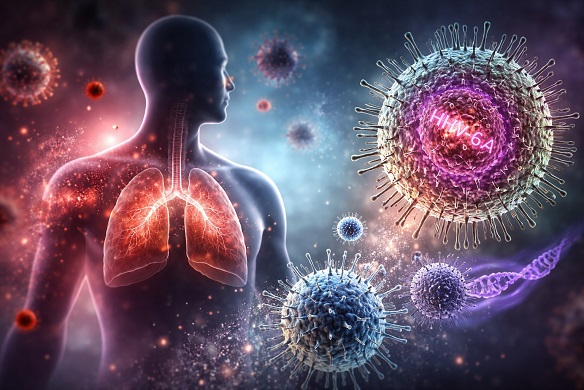 New research reveals how COVID-19 can awaken a dormant herpes virus through weakened immune defenses
This
Medical News report is based on detailed laboratory and clinical investigations carried out by researchers from the University of Ferrara, Italy.
Understanding the Immune System Link
Natural killer cells are an important part of the body’s first line of defense against viruses. These cells rely on a balance of activating and inhibitory signals to destroy infected cells. One inhibitory signal involves a receptor known as KIR2DL2 and its matching molecule HLA-C1. When both are present, the immune response can become overly restrained.
The study analyzed blood samples from 110 COVID-19 positive individuals and compared them with 109 COVID-19 negative individuals. Researchers found that people infected with SARS-CoV-2 were far more likely to carry the KIR2DL2 and HLA-C1 combination. This genetic pairing can reduce the effectiveness of natural killer cells, making it harder for the body to control viral infections.
Herpes Virus Reactivation During COVID-19
Human herpesvirus 6 is a widespread virus that infects most people early in life and then remains dormant. There are two forms, HHV-6A and HHV-6B. While HHV-6B is usually linked to childhood illnesses, HHV-6A has been associated with chronic inflammatory conditions.
More importantly, HHV-6A reactivation was far more common in COVID-19 patients, while HHV-6B was mainly found in those without SARS-CoV-2 infection.
COVID-19 patients who had both the KIR2DL2 HLA-C1 immune profile and HHV-6A detected in their blood were more likely to have serious health problems. These included cardiovascular diseases, chronic lung conditions, and diabetes.
Links to Severe Disease and Death
Among patients who died during hospitalization, HHV-6A reactivation was found in every case where herpesvirus DNA was detected. A large proportion of these patients also carried the inhibitory immune gene combination. This suggests that weakened early immune responses may allow both SARS-CoV-2 and HHV-6A to persist longer in the body, leading to immune exhaustion and more severe disease.
Patients with cardiovascular disorders appeared especially vulnerable, indicating that viral reactivation may worsen inflammation and blood vessel damage already caused by COVID-19.
Why These Findings Matter
The findings suggest that a specific genetic immune profile ma
y act as a hidden risk factor during COVID-19, allowing dormant viruses to reawaken and complicate recovery. This could help explain why some individuals experience more severe illness despite similar exposure to the virus.
Conclusion
In conclusion, the study highlights a dangerous interaction between COVID-19, immune system genetics, and herpesvirus reactivation. The presence of the KIR2DL2 HLA-C1 immune profile appears to weaken early antiviral defenses, enabling HHV-6A reactivation and contributing to worse clinical outcomes. These insights may help identify high-risk patients earlier and guide future monitoring and treatment strategies.
The study findings were published in the peer reviewed journal: Microorganisms.
https://www.mdpi.com/2076-2607/14/1/235
For the latest COVID-19 News, keep on logging to Thailand
Medical News.
Read Also:
https://www.thailandmedical.news/articles/coronavirus
https://www.thailandmedical.news/articles/long-covid




 Share
Share
 Tweet
Tweet
 Share
Share