Nikhil Prasad Fact checked by:Thailand Medical News Team Feb 08, 2026 8 months, 11 hours, 28 minutes ago
Medical News: A Natural Plant Under Scientific Spotlight
Influenza A H1N1 continues to pose a serious global health risk, especially due to rising resistance against existing antiviral drugs. Scientists are increasingly turning toward traditional medicinal plants for safer alternatives. Artemisia, a plant long used in traditional medicine across Asia and Europe, has now attracted major scientific attention. This
Medical News report highlights a new laboratory-based study exploring how Artemisia plant extracts may help block and control H1N1 influenza infection.
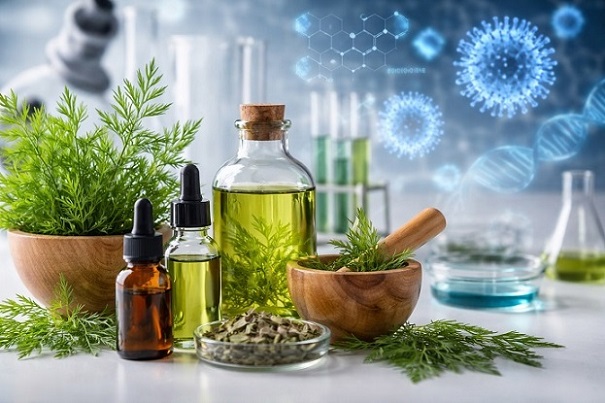 Laboratory research reveals Artemisia plant extracts may block flu virus entry and reduce inflammation.
Who Conducted the Study
Laboratory research reveals Artemisia plant extracts may block flu virus entry and reduce inflammation.
Who Conducted the Study
The research was carried out by scientists from Zhejiang Sci-Tech University and the Zhejiang International Joint Laboratory of Traditional Medicine and Big Health Products Development in China, the Shenzhen Center for Disease Control and Prevention in China, Wroclaw Medical University in Poland, and the Chinese-Tajik Innovation Center for Natural Products under the National Academy of Sciences of Tajikistan.
How the Study Was Performed
Researchers tested extracts from three Artemisia species: Artemisia caruifolia, Artemisia argyi, and Artemisia capillaris. Using advanced laboratory techniques, including molecular docking, chemical profiling, and cell-based experiments, they examined how these extracts interacted with the H1N1 virus and infected cells. The focus was on whether the plant compounds could block viral entry, reduce viral multiplication, and calm harmful inflammation.
Key Findings Explained Simply
The study revealed that Artemisia extracts did not directly kill the virus. Instead, they worked by stopping the virus from attaching to and entering healthy cells. High concentrations of the extracts damaged the virus’s surface proteins, particularly hemagglutinin, which the virus needs to latch onto cells. Two extracts also interfered with neuraminidase, an enzyme essential for the virus to escape infected cells and spread further.
In addition, the extracts significantly lowered the amount of viral genetic material and proteins produced inside infected cells. This meant fewer new virus particles were formed. The researchers also observed that the extracts reduced excessive inflammatory responses by calming key immune signaling pathways, including TLR4, NF-κB, and MyD88. These pathways are often responsible for severe lung inflammation during flu infections.
Why These Results Matter
One of the most important discoveries was that Artemisia extracts worked at multiple stages of infection. They helped prevent infection, slowed virus growth after infection, and reduced damaging inflammation. The main active compounds identified included quercetin and luteolin, natural plant flavonoids already known for antiviral and anti-inflammatory properties.
Study Conclusions and Future Outlook
Overall, the findings suggest that Artemisia plant ext
racts offer a multi-layered defense against H1N1 influenza by blocking viral entry, limiting virus release, and reducing harmful immune overreactions. While these results are based on laboratory experiments and not human trials, they provide strong scientific support for further research. With growing drug resistance worldwide, natural products like Artemisia could play an important role in future flu prevention strategies and supportive treatments, either alone or alongside existing therapies.
The study findings were published in the peer reviewed journal: Pharmaceuticals.
https://www.mdpi.com/1424-8247/19/2/275
For the latest on herbs and phytochemicals, keep on logging to Thailand
Medical News.
Read Also:
https://www.thailandmedical.news/articles/herbs-and-phytochemicals
https://www.thailandmedical.news/articles/influenza-or-flu




 Share
Share
 Tweet
Tweet
 Share
Share