Thailand Doctors Explore New Nano Drug Delivery Protocol, Bringing Hope for Cholangiocarcinoma Treatments
Nikhil Prasad Fact checked by:Thailand Medical News Team Feb 05, 2026 8 months, 1 week, 19 hours, 22 minutes ago
Medical News: Bile duct cancer also known as cholangiocarcinoma is one of the most aggressive and deadly cancers affecting the digestive system. It develops in the tubes that carry bile from the liver to the intestine and is especially common in parts of Southeast Asia including northeastern Thailand. A new comprehensive review by Thai researchers now highlights how advanced nano-based drug delivery systems could dramatically change how this cancer is treated, offering new hope to patients who currently face very limited options. This
Medical News report explores these important findings in a simple and easy to understand way.
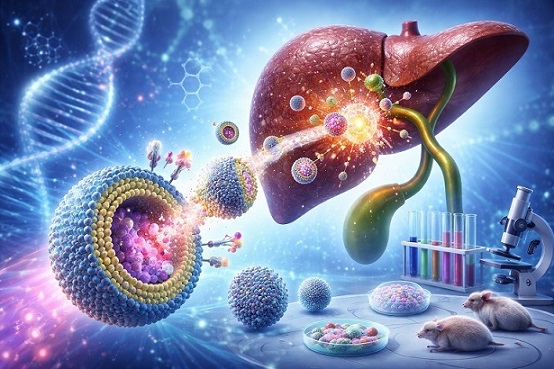 Nano technology could transform treatment options and survival for bile duct cancer patients
Why Cholangiocarcinoma is So Deadly
Nano technology could transform treatment options and survival for bile duct cancer patients
Why Cholangiocarcinoma is So Deadly
Cholangiocarcinoma is difficult to detect early because symptoms often appear only after the disease has already spread. By the time most patients are diagnosed surgery is no longer possible. Even when surgery can be done survival rates remain low. Standard chemotherapy drugs such as gemcitabine and cisplatin are commonly used but they often harm healthy cells along with cancer cells leading to severe side effects and drug resistance. This makes treatment less effective and reduces quality of life for patients.
The Promise of Nanotechnology in Cancer Care
Nanotechnology works at an extremely small scale far smaller than a human cell. Scientists can design tiny particles known as nanoparticles to carry cancer drugs directly to tumor cells. This targeted approach helps concentrate treatment where it is needed most while sparing healthy tissues. The review explains that nanomedicine can improve drug stability allow slow and controlled release and increase the amount of medicine that actually reaches the tumor.
How Nano Based Drug Delivery Works
Thailand Doctors describe two main strategies passive targeting and active targeting. Passive targeting takes advantage of the fact that tumor blood vessels are leaky allowing nanoparticles to accumulate in cancer tissue more easily than in normal tissue. Active targeting goes a step further by attaching special molecules to nanoparticles that recognize and bind to markers found mainly on bile duct cancer cells. This helps drugs enter cancer cells more efficiently.
Types Of Nanoparticles Showing Promise
Several nanoparticle systems are discussed including polymer-based lipid based and inorganic nanoparticles. For example, chitosan and PLGA nanoparticles can safely carry chemotherapy drugs and release them slowly inside tumors. Liposomes which are tiny fat like bubbles have been used to deliver drugs such as gemcitabine with better results and fewer side effects. Some nanoparticles are also combined with light activated therapies to kill cancer cells more precisely.
Targeting Cancer Cells More Precisely
The review highlights exciting advances where nanoparticles are designed to target specific receptors found on bile duct cancer cells such as HER2 folic acid receptors and EpCAM. In laboratory and animal studies these targeted systems reduced tumor size improved drug response and activated the immune system against cancer cells. Some approaches even deliver genetic material to switch off cancer survival signals.
Challenges And Safety Concerns
While the benefits are promising the researchers also stress the importance of safety. Nanoparticles can behave differently inside the body depending on their size shape and composition. Potential risks such as inflammation or organ damage must be carefully studied. More clinical trials in humans are urgently needed to confirm safety and effectiveness before these treatments can become widely available.
Conclusions
Overall, the findings show that nano-based drug delivery systems could represent a major turning point in the treatment of cholangiocarcinoma. By improving drug targeting reducing side effects and overcoming drug resistance nanomedicine offers a realistic path toward better survival and quality of life for patients. Although challenges remain especially in translating laboratory success into real world treatments the rapid progress in this field is encouraging. Continued research and well-designed clinical trials will be essential to turn these advanced technologies into standard care for bile duct cancer patients in the near future.
The researchers involved in the study are from the National Nanotechnology Center or NANOTEC under the National Science and Technology Development Agency-NSTDA-Thailand.
The study findings were published in the peer reviewed journal: Hepatoma Research.
https://www.oaepublish.com/articles/2394-5079.2024.148
For the latest on bile-duct cancer, keep on logging to Thailand
Medical News.
Read Also:
https://www.thailandmedical.news/articles/cancer




 Share
Share
 Tweet
Tweet
 Share
Share