Nikhil Prasad Fact checked by:Thailand Medical News Team Feb 08, 2026 8 months, 10 hours, 25 minutes ago
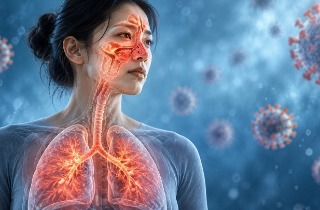
Medical News: A new scientific review is raising fresh concerns about how COVID-19 may leave behind long-lasting immune damage that could quietly increase cancer risks in some people. Researchers from the Institute of Microbiology and Virology at Riga Stradins University in Latvia examined growing evidence that SARS-CoV-2 infection can disrupt immune balance in ways that resemble mechanisms already known to support cancer development. This
Medical News report highlights why scientists say long-term monitoring of COVID-19 survivors may be essential.
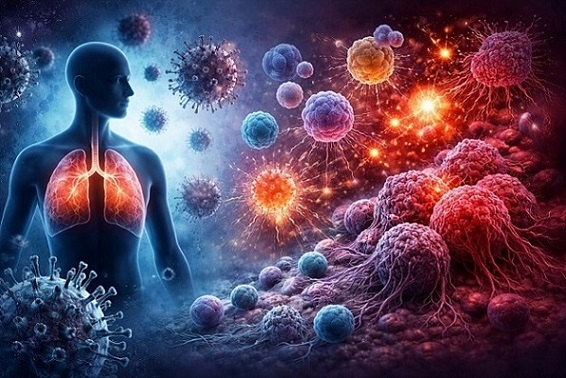 Lingering immune disruption after COVID-19 may create conditions that allow cancer-related
processes to quietly develop over time
How COVID-19 Disrupts the Immune System
When SARS-CoV-2 enters the body, the immune system usually launches a strong attack to eliminate it. In many people, this response resolves normally. However, the researchers explain that a significant subset of patients develop lingering immune disturbances marked by chronic inflammation, exhausted immune cells, and poor tissue repair. These immune changes are now widely associated with long COVID and may persist for months or even years after infection.
Chronic Inflammation and Cancer Pathways
The review outlines how persistent inflammation after COVID-19 mirrors biological processes that drive cancer. Constant release of inflammatory chemicals such as interleukin-6 and tumor necrosis factor can damage DNA, promote abnormal cell growth, and weaken the immune system’s ability to detect early cancer cells. The authors note that these same pathways are well-known contributors to tumor formation and progression.
Viral Proteins and Cellular Stress
Beyond whole-virus infection, individual SARS-CoV-2 proteins may also interfere with normal cell signaling. The spike and membrane proteins have been shown in laboratory studies to activate molecular pathways linked to cell survival, scarring, and uncontrolled growth. These pathways, including NF-κB and JAK-STAT signaling, are frequently overactive in cancers and may create an environment that allows damaged cells to thrive.
Immune Exhaustion and Reduced Surveillance
Another key concern discussed in the study is immune exhaustion. After COVID-19, some patients show reduced numbers of effective T-cells and natural killer cells, which are crucial for destroying infected or abnormal cells. This weakened immune surveillance may reduce the body’s ability to eliminate emerging cancer cells, especially in individuals with prolonged symptoms or pre-existing health conditions.
What This Means Going Forward
In conclusion, the review emphasizes that SARS-CoV-2 is not classified as a cancer-causing virus, but its long-term effects on the immune system may indirectly influence cancer risk in vulnerable individuals. The authors call for careful long-term follow-up of COVID-19 survivors, particularly those with long COVID, to better understand immune recovery, cancer surve
illance needs, and preventive strategies.
The study findings were published on a preprint server and are currently being peer reviewed.
https://www.preprints.org/manuscript/202602.0176
For the latest news, keep on logging to Thailand
Medical News.
Read Also:
https://www.thailandmedical.news/articles/cancer
https://www.thailandmedical.news/articles/coronavirus




 Share
Share
 Tweet
Tweet
 Share
Share