Omicron and Its Newer Sub-Lineages Trigger Wider Hidden Damage Despite Mild Symptoms
Nikhil Prasad Fact checked by:Thailand Medical News Team Dec 07, 2025 9 months, 6 days, 13 hours, 10 minutes ago
Medical News: Evolving SARS-CoV-2 Variants Show Hidden Pathways of Damage
A new scientific study has uncovered that Omicron variants of SARS-CoV-2—despite producing milder symptoms during initial infection—are quietly disrupting deeper biological processes in the human body. The research, conducted by experts from the Yenepoya Research Centre in Mangalore and the Department of Biosciences at Mangalore University, reveals that Omicron interacts with a broader range of human proteins than previous strains, potentially impacting neurological, metabolic, and cellular systems. This
Medical News report explores how these interactions could contribute to long-term health effects, including persistent post-COVID symptoms and potential neurodegeneration.
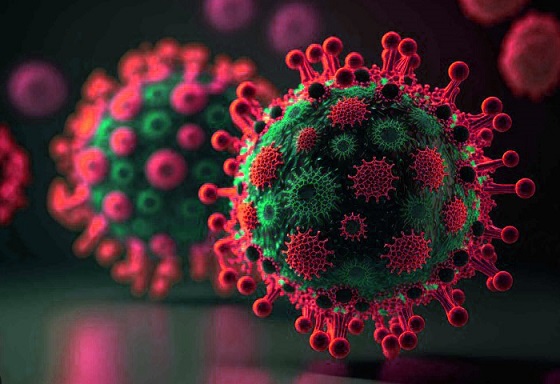 Despite causing mild initial symptoms, Omicron variants target deep biological systems including those
linked to neurodegeneration.
How SARS-CoV-2 Hijacks the Body
Like earlier strains, Omicron enters human cells by attaching its spike protein to ACE2 receptors—found abundantly in the lungs, brain, heart, blood vessels, and gastrointestinal tract. Once inside the cell, the virus uses host machinery to replicate, build new viral particles, and spread. Earlier variants such as Alpha and Delta hijacked these systems primarily to damage respiratory and inflammatory pathways. However, Omicron has evolved to target a wider variety of host proteins, many of which are critical to neurological and metabolic function.
To study these interactions, researchers developed a custom Python tool called BioEnrichPy. This platform allowed them to build protein–protein interaction (PPI) networks between human proteins and viral components, then analyze the functional damage caused by each SARS-CoV-2 variant.
Alpha Variant Showed Narrow Disruption
The Alpha variant, dominant during the first wave, targeted relatively narrow pathways. It disrupted ribosomes (the protein-building machinery of the cell), interfered with mRNA stability, and influenced protein trafficking within the endoplasmic reticulum. These actions helped it replicate quickly but primarily limited its damage to the respiratory tract. Key hub proteins targeted by Alpha included ACE2, TBK1, SERPING1, and TRAF3—most of which play roles in immune signaling and protein regulation.
Delta Variant Expanded Systemic Disruption
Delta, which caused widespread and more severe outbreaks globally, displayed a more extensive interaction profile. It targeted over 4,000 human proteins and disrupted not only the respiratory and immune systems but also pathways linked to cardiovascular health, cell metabolism, and intracellular transport. Among the key hub proteins affected by Delta were AP2M1, G3BP1, ITGB1, ATP1A1, and PPP1CA—all of which are critical to maintaining cellular structure, signaling, and energy regulation.
Delta also altered pathways associated with endocytosis, prion disease, and amyotrophic lateral sclerosis (ALS), suggesting that
its effects could extend into areas of cellular stress and neuroinflammation.
Omicron Disrupts the Broadest Range of Biological Systems
The Omicron variant exhibited the most complex and widespread disruptions. Unlike earlier strains, Omicron interacted with more than 5,500 human proteins and targeted biological pathways well beyond the lungs or immune system. The study’s enrichment analysis revealed that Omicron heavily impacted proteins involved in mitochondrial function, ribosomal machinery, intracellular transport, and neurological processes.
Crucially, while this does not mean Omicron directly causes diseases like Alzheimer's or Parkinson’s, it does indicate that the variant stresses the same biological systems that are involved in neurodegeneration. This includes systems responsible for protein folding, mitochondrial integrity, and oxidative stress responses—processes that are already vulnerable in individuals predisposed to neurodegenerative conditions.
Hub Proteins Reveal Deeper Mechanisms of Disruption
Omicron’s most affected hub proteins included ATP2A2 (a regulator of calcium homeostasis in muscle and nerve cells), SNRPD1 (linked to RNA processing and cell cycle regulation), and RPN1 (a subunit involved in protein glycosylation and folding). The variant also targeted numerous ribosomal proteins such as RPL18A, RPS9, RPS3, and PSMC1, all of which are key to maintaining cellular protein balance under stress.
By targeting these hub proteins, Omicron interferes with the cellular mechanisms that keep proteins correctly folded and functional. Misfolded proteins, when not properly managed, can lead to inflammation, cellular dysfunction, and long-term damage—especially in neurons and muscle cells.
Neurological Pathways and Long COVID
The KEGG (Kyoto Encyclopedia of Genes and Genomes) pathway analysis conducted in the study showed that Omicron's disruptions overlapped with pathways involved in Alzheimer’s disease, Parkinson’s disease, Huntington’s disease, prion disease, and ALS. Again, this does not mean Omicron directly causes these illnesses, but it highlights the fact that the variant triggers stress in biological pathways central to brain and nerve health.
These findings help explain why so many people infected with Omicron—even those with mild symptoms—report lingering neurological issues such as brain fog, memory loss, sleep disturbances, and chronic fatigue. The virus may not cause immediate hospitalization, but its silent interference with neuro-metabolic systems can have lasting effects.
Impact on Cellular Metabolism and Mitochondria
The study also revealed significant enrichment in pathways associated with mitochondrial dysfunction. Mitochondria are the energy generators of the cell, and damage to them can result in extreme fatigue, poor muscle function, and metabolic imbalances. Omicron variants target ATP synthase complexes and other mitochondrial-related proteins, weakening the cell’s energy supply chain.
Combined with ribosomal stress and impaired protein folding, this could explain the persistence of symptoms in individuals suffering from post-acute sequelae of COVID-19 (PASC), more commonly known as long COVID.
Subvariants May Refine These Disruptions Further
Notably, the researchers emphasized that newer Omicron subvariants, such as XBB and BA.2.86, show further refinements in these interactions. With additional mutations in the spike and non-structural proteins, these newer versions of the virus may be enhancing their ability to avoid immune detection while deepening the disruption of host biological systems.
Why Milder Symptoms Can Still Be Dangerous
The apparent mildness of Omicron in terms of fever, cough, or lung symptoms does not mean it is harmless. Rather than causing immediate inflammation or respiratory failure, it now seems the virus has shifted its strategy. By subtly altering protein networks, folding systems, and energy metabolism, Omicron variants may cause long-term disruption that is less visible but potentially more damaging.
Conclusion
The study strongly indicates that Omicron variants of SARS-CoV-2, despite being perceived as mild in the short term, are capable of triggering far-reaching and hidden biological damage. By interfering with neurological, metabolic, and mitochondrial pathways, Omicron may be laying the groundwork for long-term health complications in many individuals. Understanding these variant-specific interactions is critical not only for managing long COVID but also for preparing for the emergence of future variants with even more sophisticated host-targeting strategies. Continuous surveillance, deeper molecular analysis, and therapeutic development must remain top priorities as SARS-CoV-2 continues to evolve.
The study findings were published in the peer reviewed journal: COVID
https://www.mdpi.com/2673-8112/5/12/203
For the latest COVID-19 news, keep on logging to Thailand
Medical News.
Read Also:
https://www.thailandmedical.news/articles/coronavirus
https://www.thailandmedical.news/articles/long-covid




 Share
Share
 Tweet
Tweet
 Share
Share