Phytochemicals from Saffron Shows Promise Against Deadly Cancer Drug Heart Damage
Nikhil Prasad Fact checked by:Thailand Medical News Team Jan 17, 2026 8 months, 3 weeks, 1 day, 11 hours, 40 minutes ago
Medical News: Saffron Compound Could Protect Hearts from Cancer Drug Side Effects
A new animal study from China suggests a natural ingredient found in saffron flowers may help prevent a rare but dangerous heart condition caused by modern cancer drugs.
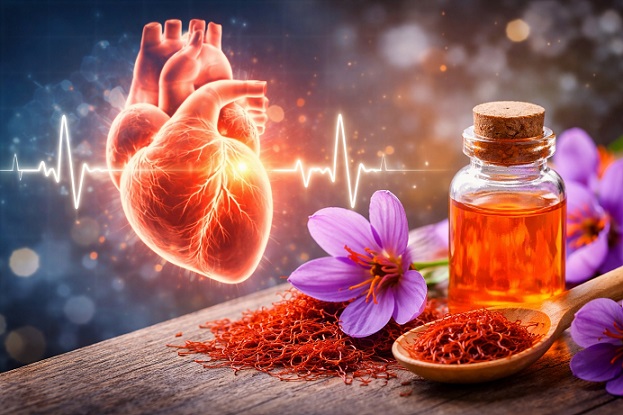 Saffron-derived crocins shielded heart tissue from severe immune-drug inflammation in a mouse study.
Researchers from the Institute of Chinese Materia Medica and the Institute of Basic Theory for Chinese Medicine, both part of the China Academy of Chinese Medical Sciences in Beijing, discovered that phytochemical compounds called crocins helped stop heart inflammation triggered by immune checkpoint inhibitors—popular cancer therapies used around the world.
This
Medical News report highlights one of the first investigations to show how saffron compounds might shield the heart from medication-related injury.
Understanding the Risk
Immune checkpoint inhibitors are powerful cancer medicines that work by activating the body’s own immune cells. While highly successful against many cancers, these drugs can sometimes turn the immune system against healthy tissues.
One of the most alarming complications is immune-related myocarditis—a sudden inflammation of the heart muscle. Though uncommon, occurring in roughly one in every hundred treated patients, it can be fatal in up to half of cases. Symptoms may include irregular heartbeat, chest pain, or sudden heart failure.
Crocins: A Natural Multitasker
Crocins are vibrant yellow pigments that give saffron its color. Earlier studies suggested they have antioxidant, anti-tumor, and anti-inflammatory powers. The Beijing research team set out to test whether these compounds could protect the heart.
To simulate real-world cancer treatment, scientists implanted human liver cancer cells in mice and treated them with pembrolizumab, a standard immune checkpoint drug. They then added low or high doses of crocins for 14 days.
Clear Signs of Protection
-Tests showed crocins helped preserve cardiac function.
-Mice receiving checkpoint drugs alone had weaker heart pumping ability.
Crocin-treated mice regained much of that lost function, with higher ejection fraction and better heart muscle contraction.
-Blood markers of heart damage—CK-MB and troponin—fell sharply in crocin-treated animals.
Microscope images reinforced the results:
Untreated mice had swollen heart tissue full of inflammatory immune cells.
Crocin-treated tissues showed fewer damaged cells and less fibrosis (scarring), even at moderate doses.
The mice’s enlarged spleens—caused by excessive immune activation—also shrank toward normal size.
Ho
w Crocins Work
Researchers traced the protective effect to a molecular safety network known as the Hpx/Nrf2/HO-1 pathway, which helps cells defend themselves from stress.
Key findings included:
-Crocins reduced Hpx, a liver-made protein that rises during inflammation.
-They boosted Nrf2, a stress-response protein that switches on antioxidant defenses.
-They increased HO-1, an enzyme that breaks down harmful molecules generated during immune attacks.
Computer docking simulations confirmed that crocin I, II, and III bind tightly to all three pathway proteins, explaining why the compounds trigger protection at multiple points.
What It Means
The study suggests crocins could one day act as a complementary therapy to reduce heart-related complications in cancer patients receiving immune checkpoint inhibitors. While the findings are promising, the research was limited to mice. Human clinical trials will be required to confirm safety, proper dosing, and true medical benefit.
Conclusion
The research offers an intriguing example of how traditional medicinal plants may solve modern medical problems. By dialing down dangerous immune reactions while supporting the heart’s natural defenses, crocins appear to counteract one of the most feared complications of cancer immunotherapy. Although further trials are essential, the study opens the door to developing safer treatment combinations and may eventually help patients stay on lifesaving cancer drugs without sacrificing heart health.
The study findings were published in the peer reviewed International Journal of Molecular Sciences.
https://www.mdpi.com/1422-0067/27/2/911
For the latest on Herbs and Phytochemicals, keep on logging to Thailand
Medical News.
Read Also:
https://www.thailandmedical.news/articles/herbs-and-phytochemicals




 Share
Share
 Tweet
Tweet
 Share
Share