Is COVID-19 Silently Draining Vitamin B12 Like HIV, Triggering Surprising Neurological Damage?
Nikhil Prasad Fact checked by:Thailand Medical News Team Jan 15, 2026 8 months, 2 weeks, 6 days, 7 hours, 17 minutes ago
Thailand Medical News Exclusive: A Growing Mystery Behind Long COVID Symptoms
Doctors worldwide are watching a disturbing trend unfold: people who recover from COVID-19—and even some never hospitalized—are developing classic signs of vitamin B12 deficiency. These include numbness, burning sensations in the limbs, “pins and needles,” balance problems, fatigue, cognitive fog, and mood changes traditionally linked to malabsorption disorders or HIV infections.
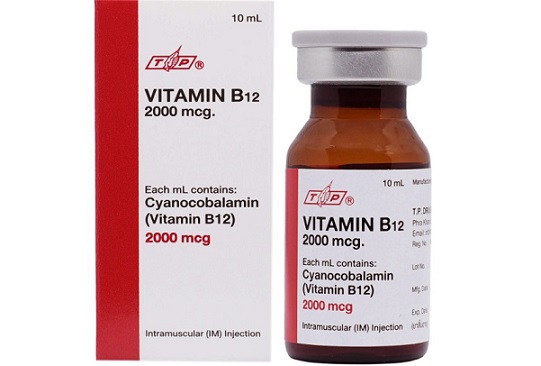 Thailand Medical News warns that COVID-19 may be silently depleting vitamin B12, triggering neurological fallout.
While earlier research focused on individuals with pre-existing nutritional deficiencies being more susceptible to severe COVID-19,
Thailand Medical News is now asking a sharper question—is SARS-CoV-2 causing B12 depletion, much like HIV does, and paving the way for neurological issues?
How COVID-19 and HIV May Share a Hidden Mechanism
HIV infection is well known for accelerating B12 deficiency by damaging the gastrointestinal tract, triggering inflammation, disturbing nutrient transport proteins, and interacting with medications that block absorption. This results in neurological decline, anemia, and immune dysfunction unless supplementation is provided.
Emerging COVID-19 findings suggest worrying overlap. The virus attacks multiple organs, including the gut, where vitamin B12 absorption occurs via intrinsic factor in the stomach and ileal receptors. Many long COVID patients present with chronic gastrointestinal swelling, persistent diarrhea, and dysbiosis—all hallmark triggers of nutritional shortfalls.
Thailand Medical News believes COVID-19–driven inflammation may compromise the same pathways HIV disrupts, leaving patients with declining functional B12 despite normal diets.
The Turkish Study Raising Red Flags
In a 2023 investigation by Sezgin et al. published in the National Institutes of Health (NIH) research archives, serum vitamin B12 levels were measured across hospitalized COVID-19 patients.
The study discovered:
-Markedly lower B12 levels in moderate and severe COVID-19 cases compared to controls
-Elevated homocysteine, a B12-linked amino acid associated with clotting risk
A correlation between B12 depletion, inflammation and respiratory impairment
That study however only concluded that Vitamin B12 deficiencies were driving COVID-19 susceptibilities and but did not conclude that COVID-19 was actually driving Vitamin b12 itself
Suggestive evidence that SARS-CoV-2 may reduce B12 availability even in individuals previously sufficient
The researchers only noted that vitamin B12 interacts with essential lung-protective proteins such as alpha-1 antitrypsin (A1AT) and metabolizes homocysteine—two factors tied direc
tly to immune regulation and cardiovascular integrity. Low B12 may therefore worsen the infection, creating a damaging two-way feedback loop. The authors concluded that COVID-19 severely affects those with lower B12 and higher homocysteine, urging much larger cohorts to validate findings.
Why Neurological Symptoms Are Becoming Hard to Ignore
Long COVID clinics across Europe, Asia, and North America report sensory, cognitive, and mobility impairments strongly resembling subacute combined degeneration, a classic manifestation of B12 deficiency.
Patients often describe:
-Loss of vibration and position sense
-Tingling in hands and feet
-Memory problems or brain fog
-Depression and irritability
-Gait instability
Alarmingly, several case reports show individuals misdiagnosed with neuropathy or post-viral syndrome who improved only after aggressive B12 supplementation—suggesting many more cases are being missed.
A Hidden Public Health Crisis in the Making
Vitamin B12 deficiency is notoriously tricky to test for. Serum levels may appear “normal,” even when biologically active B12 is insufficient at the cellular level.
COVID-19 may be accelerating:
-Increased metabolic consumption driven by inflammation
-Mitochondrial dysfunction
-Autoimmune responses targeting intrinsic factor
-Damage to intestinal surfaces
Together, these factors echo HIV’s multisystem depletion mechanism.
Because neurological damage from deficient B12 can become irreversible, proactive screening could prevent permanent disability in millions of COVID-exposed individuals.
What Thailand Medical News Want to See Next
This growing body of research suggests a major shift is coming. Instead of viewing B12 status as simply a risk factor for COVID-19 severity, investigators should now suspect that it is the virus that is actively draining the Vitamin B12 stores.
This report highlights an urgent gap: no standard screening exists for COVID-19 survivors despite strong mechanistic plausibility. We argue that post-infection panels should include functional B12 markers, holotranscobalamin, methylmalonic acid, and homocysteine—not just serum B12.
As global long COVID burden rises, clinicians should be warned that widespread underdiagnosis may be occurring, with neurological, metabolic, and vascular complications mislabeled as psychosomatic or stress-related.
We have on our own, in small observational clinical trials conducted in conjunction with clinics in Thailand, India, Mexico and Brazil found that individuals who received intravenous Vitamin B12 supplementation, had certain of their neurological and neuropsychiatric issues resolved a short time.
A Final Takeaway
Growing scientific signals suggest COVID-19 may be pushing many people—especially those with borderline nutritional status—into clinically meaningful B12 depletion, mimicking HIV-linked neurological decline. That matters, because deficiency is treatable and preventable, whereas nerve degeneration is not. If SARS-CoV-2 is indeed quietly eroding B12 reserves, millions post-infection could be at elevated risk of brain fog, neuropathy, and cardiovascular problems unless clinicians shift to early recognition and supplementation strategies. A global screening campaign, paired with deeper mechanistic studies, might prevent long-term disability, reduce healthcare strain, and rewrite how we understand post-viral illness. The growing evidence deserves rapid attention—not years of hindsight. We urge urgent research into this matter that we are hypothesizing.
References:
https://scindeks.ceon.rs/Article.aspx?artid=1452-82582303524S
https://pmc.ncbi.nlm.nih.gov/articles/PMC5111305/
https://journals.plos.org/plosone/article?id=10.1371/journal.pone.0040072
https://academic.oup.com/ofid/article/12/Supplement_1/ofae631.681/7988468
https://www.thailandmedical.news/news/covid-19-is-causing-impaired-nutrient-absorption-in-many-individuals
https://www.springermedizin.de/prevalence-of-vitamin-b12-deficiency-associated-factors-and-corr/51508312
https://www.infectiousjournal.com/wp-content/uploads/sites/6/2017/12/e431-Prevalence-of-micronutrients-deficiencies-in-a-cohort-of-HIV-positive-individuals-on-ART.pdf
For the latest COVID-19 News, keep on logging to Thailand
Medical News.
Read Also:
https://www.thailandmedical.news/articles/coronavirus
https://www.thailandmedical.news/articles/long-covid




 Share
Share
 Tweet
Tweet
 Share
Share

































