Bromhexine and High Dose Colchicine Can Prevent and Treat Flu as Well as COVID-19 Infections
Nikhil Prasad Fact checked by:Thailand Medical News Team Jan 05, 2026 9 months, 1 week, 7 hours, 16 minutes ago
Medical News: A Fresh Look at Old Medicines for New Viral Threats
As the world continues to deal with recurring waves of COVID-19 and seasonal influenza, researchers are still searching for practical and affordable ways to prevent infections and reduce deaths. While certain antiviral drugs have helped to some extent, complications such as severe inflammation and organ failure remain a major concern. A recent scientific review has taken a different approach by closely examining two long-known and inexpensive medicines that together offer strong protection against both COVID-19 and influenza.
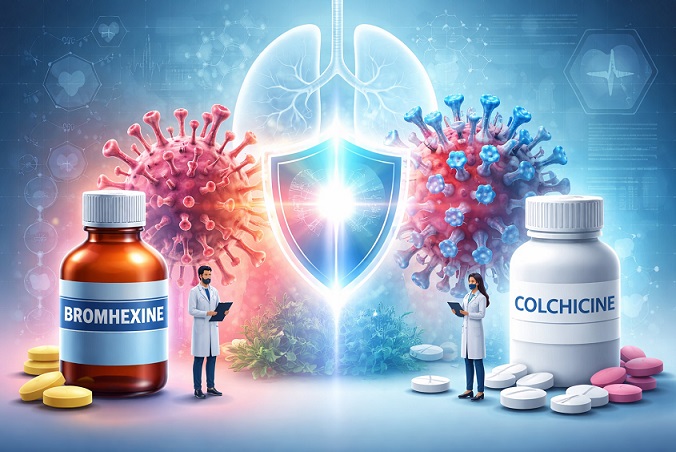 Old affordable medicines may hold the key to preventing severe COVID-19 and influenza complications
This
Medical News report explores how bromhexine and colchicine, drugs that have been in use for decades, could play a key role in stopping viral infections early and preventing dangerous immune reactions later.
The research was led by scientists from the Research Institute of Innovative Medical Science, Department of Medical Chemistry and Biochemistry, Medical Faculty, Medical University Sofia in Bulgaria. The work was supported by national scientific funding bodies and reviewed according to established ethical standards.
Why COVID-19 and Influenza Are Still Dangerous
Despite advances in medicine, COVID-19 and influenza continue to claim lives worldwide. Influenza virus strains like H1N1 and H3N2 causes hundreds of thousands of deaths every year, while COVID-19 has resulted in millions of fatalities globally. Many severe cases do not occur simply because of the virus itself, but because the body’s immune system overreacts. This excessive reaction, often called a cytokine storm, can damage lungs, blood vessels, and vital organs.
The researchers focused on two key biological processes that are shared by both viruses. One process allows the virus to enter human cells. The other process triggers the intense inflammation that leads to severe illness and death.
Blocking the Virus Before It Enters Cells
Both influenza viruses and SARS-CoV-2 rely on a human enzyme called TMPRSS2 to enter cells in the respiratory tract. If this enzyme is blocked, the virus struggles to infect the body.
Bromhexine hydrochloride, widely used as a cough medicine for more than sixty years, was identified as an effective blocker of TMPRSS2. According to the review, bromhexine works best when taken before infection or immediately after exposure. When used in this preventive way, bromhexine can significantly reduce the chances of becoming infected. Even if infection occurs, symptoms tend to be much milder.
Importantly, bromhexine accumulates in lung tissues at levels high enough to block viral entry, while remaining safe and well tolerated. Researchers observed that people who took bromhexine regularly during high-risk periods were far less likely to become ill.
Stopping the Dangerous Immune Overreaction
Once the vi
rus is inside the body, the main threat becomes uncontrolled inflammation. This is driven by a powerful immune structure known as the NLRP3 inflammasome. When overstimulated, it releases large amounts of inflammatory substances that can cause lung failure, blood clots, and damage to multiple organs.
Colchicine, a drug traditionally used to treat gout and inflammatory conditions, is known to suppress this inflammasome. However, the review highlights that many previous studies used colchicine doses that were too low to be effective. When higher, carefully monitored doses were used, the results were striking.
Patients treated with higher doses of colchicine showed significantly lower death rates, fewer hospitalizations, and faster recovery. In some studies, mortality dropped by up to seven times compared to standard care. Even among high-risk patients, including the elderly and those with obesity, outcomes improved dramatically.
Timing Is the Key to Success
One of the most important findings of the review is that timing matters more than almost anything else. Bromhexine is most effective when used early, before the virus enters cells. Colchicine is most effective when used during the critical phase of illness, just before or as severe inflammation begins.
Using antivirals alone or blocking only individual inflammatory molecules often fails because the underlying immune overreaction continues unchecked. The combined strategy of early prevention and later inflammation control appears to address both sides of the problem.
Safety and Cost Advantages
Both bromhexine and colchicine are inexpensive and widely available. Bromhexine has an excellent safety record, while colchicine’s main side effect at higher doses is temporary diarrhea. Serious liver damage or long-term harm was not observed when dosing guidelines were followed.
Compared to many newer antiviral drugs, these medicines are accessible even in low-resource settings, making them especially valuable during large outbreaks.
What This Means for the Future
The review suggests a shift in how doctors and health systems might approach respiratory viral outbreaks. Instead of relying only on vaccines and late-stage treatments, a proactive strategy using bromhexine for prevention and colchicine for complication control could save lives and reduce healthcare strain.
Conclusion
The findings strongly indicate that a combined approach using bromhexine to block viral entry and higher doses of colchicine to control harmful inflammation may offer a safe, affordable, and highly effective way to prevent severe COVID-19 and influenza outcomes. By targeting the root mechanisms of infection and immune overreaction, this strategy addresses major gaps left by current treatments and deserves serious attention from global health authorities and clinicians alike.
The study findings were published in the peer reviewed journal: Trends in Immunotherapy
https://ojs.ukscip.com/index.php/ti/article/view/1162/969
For the latest on flu and COVID-19, keep on logging to Thailand
Medical News.
Read Also:
https://www.thailandmedical.news/news/bromhexine-shows-promise-as-prophylactic-shield-against-flu-infections
https://www.thailandmedical.news/news/covid-19-news-randomized-clinical-trial-shows-that-n-acetylcysteine-and-bromhexine-prevents-covid-19-disease-severity
https://www.thailandmedical.news/news/colchicine-reduces-need-for-supplemental-oxygen-and-reduces-risk-of-mortality-in-severe-covid-19-cases
https://www.thailandmedical.news/news/covid-19-drugs-canadian-colcorona-study-shows-that-colchicine-can-reduce-certain-complications-of-covid-19
https://www.thailandmedical.news/news/covid-19-drugs-international-study-finds-colchicine-effective-for-non-hospitalized-covid-19-patients
https://www.thailandmedical.news/news/turkish-study-finds-that-colchicine-boosts-kidney-health-in-covid-19-patients
https://www.thailandmedical.news/news/university-of-virginia-study-shows-that-colchicine,-a-drug-to-treat-gout-also-helps-improves-survival-rates-of-heart-failure-patients




 Share
Share
 Tweet
Tweet
 Share
Share