Risperidone Widely Used on Dementia Patients Alarmingly Found to Increase Stroke Risk in All While Killing Some!
Nikhil Prasad Fact checked by:Thailand Medical News Team Jan 07, 2026 9 months, 6 days, 16 hours, 18 minutes ago
Medical News: A Wake-Up Call for Clinicians and Families
A sweeping new UK study has sent shockwaves through the dementia care world, warning that the common antipsychotic drug risperidone—routinely used to calm severe aggression and agitation—raises the risk of stroke in every type of dementia patient, even those who previously appeared medically “low risk.”
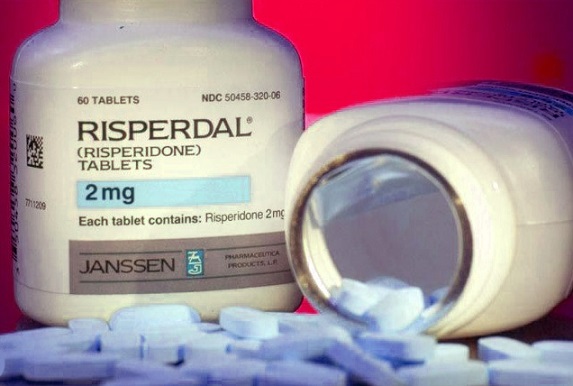 UK research finds dementia drug risperidone raises stroke risk in all patient groups
The findings come from a major collaborative project by researchers from Brunel University London, University of Exeter, University of Sheffield, and the University of Liverpool, using real-world medical records from more than 165,000 patients aged over 65.
The study confirms what smaller trials hinted at: the drug may temporarily ease behavioral symptoms, but the cost may be dangerously high. For families and doctors already wrestling with difficult care decisions, this
Medical News report adds a stark new dimension.
Why the Drug Is Used at All
Up to half of people with dementia develop agitation or aggression as the condition progresses. Patients may shout, wander, lash out, or become deeply distressed. These behaviors often traumatize families and are among the most common reasons people are placed into residential care.
Doctors are trained to try non-drug measures first—comfort routines, better lighting, sleep improvement, pain control, or calming therapies. Only when these fail, do clinicians turn to risperidone, the only licensed dementia antipsychotic in the UK and EU (and approved in Australia, New Zealand, and Canada; used off-label in the US).
Risk Strikes Everyone
The headline finding was blunt: no subgroup of patients escaped stroke risk.
Researchers tracked outcomes from NHS primary care records between 2004 and 2023, comparing risperidone users against carefully matched patients not taking the drug.
Key findings included:
-Patients with a previous stroke taking risperidone had an annual stroke rate of 22.2 per 1000 person-years, versus 17.7 per 1000 in matched controls.
-In those without a stroke history, risk still climbed from 2.2 to 2.9 per 1000 person-years.
-Hazard ratios—measures of added risk—ranged from 1.23 to 1.44, meaning users were roughly 25–45% more likely to suffer a stroke.
-The danger was highest in the first 12 weeks, a period when families are often hoping for a calming effect, not a medical emergency.
Importantly, absolute risk remains greatest in people already vulnerable—such as those with cardiovascular disease—but even patients thought “healthy enough” faced elevated danger.
What Makes the Results Different
strong>
Earlier clinical trials hinted at risk but tested relatively small, tightly screened groups of patients. The latest analysis pulls from everyday medicine: care homes, GP practices, hospitals, and varied communities across the UK.
The scale of the study—over 28,000 people prescribed risperidone—means the numbers paint a more realistic picture of how the drug behaves in normal medical settings.
No Safer Confirmed Option
Risperidone remains widely used because there is no clearly safer licensed alternative.
Other antipsychotics such as quetiapine or olanzapine are used off-label, but they also carry cardiovascular and sedation risks, and have less regulatory backing.
Doctors stress that risperidone is prescribed only when a patient’s immediate suffering outweighs the danger. Some individuals may hurt themselves, stop eating, or pose risks to caregivers. In such critical cases, the drug can provide breathing room—days or weeks of calm.
Guidance and Monitoring Still Lag
Although UK guidelines recommend limiting use to six weeks, researchers note that many patients receive the drug for longer, with uneven monitoring across the country.
Families are frequently unaware that:
-Risk rises quickly after starting treatment
-Even a mild stroke may worsen dementia dramatically
-Strokes in frail patients often lead to death within months
The study’s authors hope their findings push clinicians to communicate more clearly, review prescriptions more often, and return to non-drug approaches whenever possible.
Conclusion – A Harder but More Honest Conversation Needed
This major UK investigation delivers a sobering message: risperidone increases the risk of stroke for every dementia patient, regardless of prior heart health. While those already sickest may face the steepest absolute danger, even seemingly “lower-risk” individuals are meaningfully affected. The results do not argue for banning the drug. Instead, they demand more careful prescribing, stricter time limits, and open discussions with families about real-world consequences—especially when distress is extreme and options are few. As long as dementia care lacks better tools, risperidone will not disappear, but this study ensures that decisions to use it can be made with sharper awareness, clearer data and fewer illusions about safety.
The study findings were published in the peer reviewed British Journal of Psychiatry.
https://www.cambridge.org/core/journals/the-british-journal-of-psychiatry/article/risk-of-stroke-associated-with-risperidone-in-dementia-with-and-without-comorbid-cardiovascular-disease-populationbased-matched-cohort-study/685237BF310FCAA517FD27C5613E82F1
For the latest on drugs that increase risk of strokes, keep on logging to Thailand Medical News.
Read Also:
https://www.thailandmedical.news/articles/med-news




 Share
Share
 Tweet
Tweet
 Share
Share