Pteropine Orthoreovirus, A New Bat-Borne Virus Identified as Pathogen Behind Previously Unexplained Illness in Bangladesh
Nikhil Prasad Fact checked by:Thailand Medical News Team Jan 07, 2026 9 months, 6 days, 16 hours, 16 minutes ago
Medical News: Mystery Illness Finally Identified
For years, doctors in Bangladesh have worried about a set of patients who arrived at hospitals with high fever, breathing trouble, vomiting, confusion, and in the worst cases, brain inflammation (encephalitis). These symptoms looked like Nipah virus, a deadly infection that circulates in the country every winter. But these patients repeatedly tested negative for Nipah, leaving a worrying mystery.
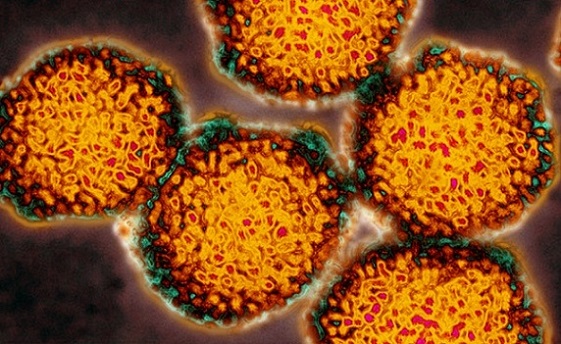 Scientists trace mysterious Nipah-like illnesses to a new hidden bat virus carried in raw date-palm sap
A team led by Columbia University’s Mailman School of Public Health in the United States has now solved that puzzle. Working together with scientists from the Institute of Epidemiology, Disease Control and Research (IEDCR) in Dhaka, International Centre for Diarrhoeal Disease Research, Bangladesh (ICDDR,B), Charles Sturt University in Australia, and the U.S. Centers for Disease Control and Prevention (CDC), the researchers discovered a completely different culprit: a new bat-borne virus called Pteropine orthoreovirus (PRV).
Records showed that five Bangladeshi patients hospitalized between late 2022 and early 2023 had been infected with this little-known virus, marking the first confirmed human cases in the country.
Bat Links Become Impossible to Ignore
All five patients had recently consumed raw date-palm sap, a sweet winter drink collected directly from trees. Fruit bats also lick this sap overnight, contaminating it with saliva, urine, or droppings. This traditional treat has long been linked to Nipah outbreaks, and now researchers say PRVs are another threat hiding in the same food source.
“Zoonotic spillover risk extends far beyond Nipah virus,” Senior author Dr. Nischay Mishra from Columbia University’s Center for Infection and Immunity told Thailand
Medical News. Dr. Mishra stressed that surveillance must be expanded to capture viruses that communities may not even know exist.
High-Tech Tools Expose a Hidden Virus
Because the patients tested negative for Nipah, scientists dug deeper using VirCapSeq-VERT—a sequencing technology created at Columbia University to identify any vertebrate-origin virus in a single run. The technology allowed the team to scan samples from the five patients and more than 130 other Nipah-like cases collected between 2006 and 2022.
They successfully detected PRV genetic material, then grew the virus in cell culture to confirm it was infectious.
Who Fell Sick—and How Badly?
The five patients came from four different regions clustered around the Padma River Basin—Faridpur, Rajbari, Khulna and Sirajganj—showing that the virus is not confined to one village or district.
Four patients were diagnosed with encephalitis, and one child experienced febrile convulsions. Most survived after two to three weeks in the hospital
. However, one patient suffered prolonged health decline and died more than a year later.
Two survivors continue to experience fatigue, walking difficulties and breathing problems, raising concern that PRVs may trigger long-lasting neurological damage.
Bats Confirmed as the Source
In a follow-up investigation, researchers captured bats near the affected communities and identified PRVs closely matching those in patients. “This is the strongest evidence yet linking bat viruses to human infection,” said Dr. Ariful Islam of Charles Sturt University, Australia.
Genetic testing shows the virus shares similarities with strains found in Indonesia, Malaysia, Zambia and Australia—suggesting that migrating fruit bat populations carry and exchange viral genes across regions. Several genome segments appear reassorted, a known warning sign for viruses capable of rapid evolution.
What the Findings Mean
The study highlights an uncomfortable truth: Bangladesh may be facing more than one lethal virus spilling over from bats every winter.
Researchers warn that milder PRV infections are likely going undetected, masked as seasonal coughs or fevers. With hundreds of thousands consuming raw tree sap, exposure risk is significant.
Conclusion
This discovery confirms that Pteropine orthoreovirus has been silently infecting people in Bangladesh and can cause severe disease resembling Nipah virus. The findings underscore a major public health challenge: dangerous pathogens can spread from wildlife to humans without anyone realizing it until modern testing reveals them. In communities where raw date-palm sap is consumed, doctors should now consider PRV whenever patients arrive with respiratory distress or signs of brain inflammation. Ongoing surveillance, better community awareness and safe food practices will be critical to preventing future spillovers, especially as bats, humans and livestock increasingly share the same environments.
The study findings were published in the peer reviewed journal: Emerging Infectious Diseases.
https://wwwnc.cdc.gov/eid/article/31/12/25-0797_article
For the latest of new viruses that pose a threat to human health, keep on logging to Thailand
Medical News.
Read Also:
https://www.thailandmedical.news/articles/infectious-diseases




 Share
Share
 Tweet
Tweet
 Share
Share