Nikhil Prasad Fact checked by:Thailand Medical News Team Jan 08, 2026 9 months, 5 days, 17 hours, 19 minutes ago
Medical News: A New Genetic Clue to A Silent Form of Blindness
A fresh wave of scientific work is helping explain why some people abruptly lose sight from glaucoma even when their eye pressure looks perfectly normal. This condition, known as normal tension glaucoma, has long confused doctors because standard treatments that lower eye pressure slow it only partially. A deeper look into genetics now points strongly toward a single gene called TANK-binding kinase 1, or TBK1, which may create an invisible threat inside the eye when its copy number increases. This
Medical News report brings the findings into focus.
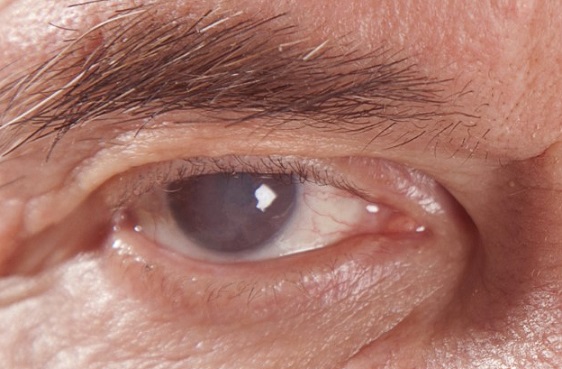 Extra TBK1 activity may quietly trigger nerve loss in normal tension glaucoma.
The research was conducted by scientists at the Department of Pharmaceutical Sciences and the North Texas Eye Research Institute, University of North Texas Health Science Center at Fort Worth (UNT Health Fort Worth, United States).
Why TBK1 Stands Out
Unlike many glaucoma risk factors that raise or lower risk by small margins, TBK1 appears to change the entire disease equation. Families who inherit an extra copy of the gene often experience nerve damage to the optic pathway without any rise in eye pressure. This makes TBK1 one of the rare glaucoma triggers tied directly to transmission from parent to child.
When Cell Recycling Goes Too Far
TBK1’s normal job is to help cells clear away damaged parts through a system called autophagy. When the gene is present in normal amounts, this cleanup protects cells and keeps them efficient. The studies now show that when TBK1 levels rise above normal, autophagy may increase to the point where it begins dismantling parts of a cell that are still needed. In retinal nerve cells, this could drain energy, thin protective structures and eventually weaken the nerve fibers that carry visual messages to the brain.
Laboratory-grown retinal cells taken from people with extra TBK1 demonstrate unusually active autophagy. Likewise, animal models engineered with TBK1 duplication gradually lose retinal ganglion cells while maintaining normal ocular pressure. These patterns closely match the way normal tension glaucoma behaves in patients.
Too Much Immune Activity in The Eye
TBK1 also controls inflammatory signaling. When overactive, it can push local immune cells to remain switched on rather than resting. Inside the retina, constant immune activation may damage surrounding nerve cells and cause slow, quiet degeneration that is hard to detect early. Experiments blocking TBK1 activity have shown preservation of retinal tissue and better optic nerve health, providing a glimpse of what future treatments could target.
What This Means for Patients
The work places TBK1 at the center of a new understanding of normal tension glaucoma. Rather than being caused by physical pressure inside the eye, the disorder may instead stem from internal cellular stress driven by excess autophagy, mitochondrial strain and prolonged inflammation
. This makes TBK1 a leading candidate for developing therapies that go beyond pressure reduction and instead strengthen nerve cell survival. The findings suggest that patients with normal eye pressure but progressive nerve damage may one day benefit from drugs that directly regulate TBK1-linked pathways, potentially slowing or preventing irreversible blindness.
The study findings were published in the peer reviewed journal: Frontiers in Neuroscience.
https://www.frontiersin.org/journals/neuroscience/articles/10.3389/fnins.2025.1735403/full
For the latest on Glaucoma, keep on logging to Thailand
Medical News.
Read Also:
https://www.thailandmedical.news/articles/glaucoma-news




 Share
Share
 Tweet
Tweet
 Share
Share