Nikhil Prasad Fact checked by:Thailand Medical News Team Dec 30, 2025 9 months, 1 week, 2 days, 12 hours, 13 minutes ago
Medical News: Scientists are uncovering new details about a vital cleanup and recycling system inside our cells that may hold the key to understanding both deadly cancers and devastating brain diseases. This system, known as the autophagy-lysosome pathway, acts like a waste disposal and recycling center, breaking down damaged proteins and worn-out cell parts so the body can stay healthy.
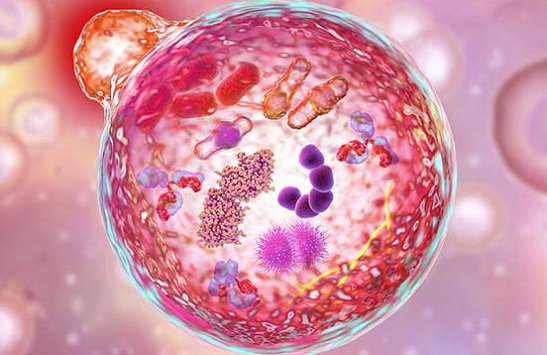 Scientists reveal how a hidden cellular recycling system can either protect the brain or help cancer survive
According to researchers, when this system fails, toxic waste builds up inside cells, leading to serious illnesses such as Alzheimer’s disease, Parkinson’s disease, Huntington’s disease, and many forms of cancer.
Who Conducted the Research
The study was carried out by researchers from the Department of Biology, College of Chemistry and Life Science, Beijing University of Technology in Beijing China. The research team included Mingyang Du, Yang Yu, Jiachang Wang, and Cuicui Ji.
How the Cell Recycling System Works
Inside every cell are tiny structures called lysosomes. These act as acidic recycling chambers filled with special enzymes that break down waste. Autophagy is the process that delivers damaged materials to lysosomes for disposal. When both systems work together smoothly, cells stay balanced and healthy.
However, the study explains that problems such as poor acid levels inside lysosomes, damaged lysosome membranes, or failure of waste delivery can cause harmful proteins to pile up. Over time, this leads to cell damage and disease.
Link to Alzheimer’s and Parkinson’s Diseases
In Alzheimer’s disease, toxic amyloid beta plaques and tau protein tangles accumulate in brain cells. The study found that faulty lysosomes struggle to break down these proteins, especially when acidity levels drop. This leads to inflammation, nerve cell death, and memory loss.
In Parkinson’s disease, a protein called alpha synuclein builds up and forms clumps known as Lewy bodies. Researchers identified several genes, including TMEM175 and GBA, that affect lysosome function. When these genes malfunction, waste clearance slows down, allowing toxic proteins to damage dopamine producing brain cells.
Cancer Uses the Same System to Survive
Surprisingly, cancer cells use the same recycling system to stay alive. Instead of breaking down waste for health, cancer cells hijack autophagy and lysosomes to recycle nutrients and survive under stress such as low oxygen or chemotherapy. This helps tumors grow faster and resist treatment.
The study highlights how some cancers increase the number and activity of lysosomes to support aggressive growth and spread.
New Treatment Opportunities
This
Medical News report highlights promising new treatment strategies. Sc
ientists are testing drugs that either boost lysosome activity for brain diseases or shut it down in cancer cells. Approaches include small molecules that restore acidity, nanoparticles that correct pH balance, and new protein degradation technologies that target disease causing proteins directly.
Study Conclusions
The researchers conclude that the autophagy lysosome pathway sits at the center of both neurodegenerative diseases and cancer. Although these conditions appear opposite, they share the same underlying cellular failures. Understanding how to fine tune this system may allow doctors to clear toxic proteins in brain diseases while starving cancer cells of their survival tools. This dual role makes the pathway a powerful target for future precision medicine therapies.
The study findings were published in the peer reviewed International Journal of Molecular Sciences.
https://www.mdpi.com/1422-0067/27/1/366
For the latest on Neurodegeneration Diseases and Cancer, keep on logging to Thailand
Medical News.
Read Also:
https://www.thailandmedical.news/articles/cancer
https://www.thailandmedical.news/articles/alzheimer,-dementia-




 Share
Share
 Tweet
Tweet
 Share
Share