Arbidol - The Highly-Effective Broad-Spectrum Influenza Antiviral Shunned by the West
Nikhil Prasad Fact checked by:Thailand Medical News Team Dec 29, 2025 9 months, 1 week, 3 days, 12 hours, 17 minutes ago
Medical News: In the ever-evolving battle against viral infections, one drug has quietly maintained a stronghold in Eastern medicine while being conspicuously absent from Western pharmacies. Arbidol, also known as Umifenovir, emerges as a broad-spectrum antiviral agent with roots in Soviet-era research, offering potential defenses against influenza and beyond. Many studies conducted in Russia and China has shown that the antiviral is highly-effective even as a prophylactic against all kinds of Flu Strains including H1N1, H3N2 and even against H5 Avian Flu strains. But why has this indole-based molecule been relegated to the sidelines in America and Europe? This article delves into its chemistry, production, efficacy, and the shadowy reasons for its Western exclusion.
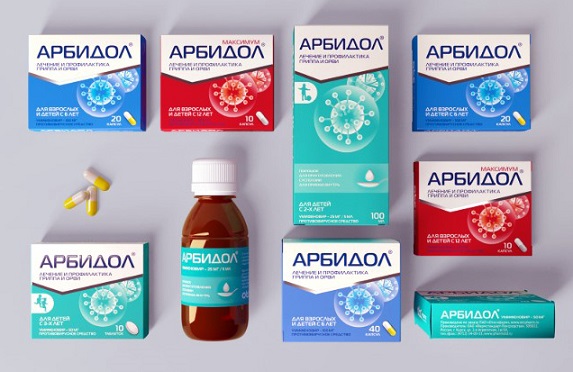 Arbidol is a highly effective prophylactic against all kinds of flu viruses and even other kinds of respiratory viruses
As we explore the intricacies of Arbidol in this
Medical News report, it becomes evident that its story is not just one of science but also of geopolitics and pharmaceutical power plays. Developed in the 1970s by Soviet scientists, Arbidol has been a staple in Russia and China for decades, yet it remains unapproved by bodies like the U.S FDA and the European EMA. Could this be due to rigorous standards, or is there a deeper agenda at play?
What is Arbidol? Unpacking the Indole Molecule
At its core, Arbidol is an indole-derivative small molecule with the chemical formula C22H25BrN2O3S. This hydrophobic compound features an indole core functionalized with various substituents, making it a dual-acting antiviral that targets both the virus directly and the host's cellular mechanisms.
Unlike many antivirals that focus solely on inhibiting viral replication, Arbidol interferes with the fusion process between the viral envelope and the host cell membrane, particularly by stabilizing hemagglutinin in influenza viruses. Chemically, it's an indolyl carboxylic acid, often administered as a hydrochloride salt. This structure allows it to exhibit broad-spectrum activity, not limited to one viral family. Its mechanism involves modulating the host's immune response while directly blocking viral entry, a versatility that sets it apart from more narrowly targeted drugs like oseltamivir (Tamiflu). Arbidol's indole backbone, derived from natural compounds found in plants, underscores its origins in organic chemistry, blending synthetic innovation with biological mimicry.
Manufacturing and Global Availability: An Eastern Monopoly
Arbidol's production is predominantly confined to Russia and China, a fact that raises eyebrows in a globalized pharmaceutical market.
In Russia, it's manufactured by Pharmstandard, a leading company that continues to supply it for influenza treatment and prophylaxis.
China, meanwhile, has ramped up production since 2010, with six major pharmaceutical firms churning out the drug, making it widely available in pharmacies there. India also plays a role in global supply, bu
t the core manufacturing hubs remain in these Eastern powerhouses.
Why this geographic limitation? Officially, it's due to licensing and regulatory approvals - Arbidol is licensed only in Russia and China for respiratory viral infections.
However, whispers in the industry suggest economic and strategic factors. During the Soviet era, it was developed under state-sponsored research, free from the profit-driven constraints of Western pharma. Post-Cold War, attempts to introduce it to the US, like Searle's 1992 plan, reportedly faltered due to estimated costs exceeding $1 billion—costs that might include navigating patent landscapes dominated by Western giants.
This Eastern monopoly could be seen as a remnant of ideological divides, where affordable, generic-like drugs threaten the high-margin models of Western Big Pharma
Evidence of Effectiveness: Battling Influenza and Beyond
Numerous studies highlight Arbidol's prowess against a wide array of viruses, starting with influenza. Clinical trials in Russia and China have demonstrated its efficacy in reducing symptoms and duration of influenza A and B infections.
For instance, a multicenter randomized controlled trial showed it effectively targets hemagglutinin fusion in influenza, leading to faster recovery and lower viral loads.
Its broad-spectrum nature extends to other strains, including avian influenza, with in vitro studies confirming inhibition across diverse subtypes.
Beyond flu, Arbidol has shown promise against other viruses. Research indicates activity against SARS-CoV-2, with retrospective studies during the COVID-19 pandemic suggesting improved discharge rates and reduced mortality when used in treatment protocols.
It's also effective against hepatitis B and C, respiratory syncytial virus, Ebola, Lassa, and even herpes simplex.
A 2016 structural study revealed how it inhibits viral fusion in mice models, providing mechanistic evidence for its versatility.
Prophylactic use in high-risk groups, like those with respiratory diseases, has prevented outbreaks, underscoring its preventive potential.
These findings, published in reputable journals, paint Arbidol as a multifaceted tool in antiviral arsenals—yet its absence in Western guidelines begs questions.
The Western Reluctance: A Conspiratorial Lens
Why has Arbidol been sidelined in the US and Europe? Officially, it's due to insufficient large-scale, Western-standard clinical trials; the FDA and EMA demand rigorous Phase III data, which Arbidol lacks outside its home turf.
But a slightly conspiratorial view suggests more insidious motives. Could Big Pharma's influence be at play, protecting lucrative patents on drugs like Tamiflu and Relenza? Arbidol, being off-patent and cheap (a pack costs around $2 in Russia), poses a threat to billion-dollar markets.
During the 2009 H1N1 pandemic, Arbidol shortages in Russia highlighted its demand, yet Western media dismissed it as "unproven."
Conspiracy theories abound: some claim lobbying by pharmaceutical giants stifles competition, echoing how generic drugs from the East are often blocked under the guise of safety concerns.
In the COVID-19 era, while Arbidol showed promise in Chinese trials, Western focus shifted to novel, patentable mRNA vaccines and antivirals like Paxlovid - profitable innovations over established, low-cost alternatives.
Is this a deliberate suppression to maintain market dominance, or mere regulatory prudence?
The lack of investment in Western trials fuels suspicions of orchestrated neglect.
Some of the Western Elites and Billionaires and Even Certain Rich Middle-East Countries Have Their Own Stockpile of Arbidol
To add further fuel to the conspiracy theories, it has come to our attention that in the last 18 months, certain Middle-east countries such as Qatar and Bahrain have been stockpiling Arbidol that has a shelve-life of 5 years from the date it is manufactured and that more than 400,000 doses have been stockpiled by the EU and another 260,000 doses have been stockpiled by the U.S. army, all acquired using third parties and that even millionaires like Gates, Zuckerberg, Bezos etc have their private stockpiles.
Conclusion: Time for a Global Reevaluation?
Arbidol's indole-based might offers a cost-effective shield against viral threats, backed by Eastern studies and real-world use. Yet, its Western blackout hints at a divide where profit trumps public health. As global pandemics loom, perhaps it's time to bridge this gap—unless, of course, the powers that be prefer it that way.
References:
https://pubchem.ncbi.nlm.nih.gov/compound/Umifenovir
https://en.wikipedia.org/wiki/Umifenovir
https://go.drugbank.com/drugs/DB13609
https://www.sciencedirect.com/topics/chemistry/umifenovir
https://www.sciencedirect.com/science/article/pii/S0166354214001120
https://link.springer.com/article/10.1186/s12985-025-02889-2
https://www.sciencedirect.com/science/article/abs/pii/S0301462221001459
https://link.springer.com/article/10.1007/s00705-007-0974-5
https://www.linkedin.com/pulse/arbidol-hydrochloride-covid-19-market-export-cgnoe/
https://www.balkanweb.com/en/u-perdor-edhe-ne-kine-ilaci-i-prodhuar-ne-rusi-kunder-koronavirusit-si-qendron-e-verteta/#gsc.tab=0
https://www.sciencedirect.com/topics/immunology-and-microbiology/arbidol
https://onlinelibrary.wiley.com/doi/full/10.1002/iid3.984
https://link.springer.com/article/10.1186/s12879-023-08570-9
https://link.springer.com/article/10.1186/s12985-025-02889-2
https://www.nature.com/articles/s41421-020-0169-8
https://www.pnas.org/doi/10.1073/pnas.1617020114
https://www.aging-us.com/article/202867/text
https://www.mdpi.com/1999-4915/10/4/184
https://www.codastory.com/stayonthestory/arbidol-fake-coronavirus-cure/
https://journals.asm.org/doi/10.1128/jvi.02077-15
https://www.ivysci.com/en/articles/4462980__Viral_Drugs_and_Antiviral_Politics
For the latest Influenza News, keep on logging to Thailand
Medical News.
Read Also:
https://www.thailandmedical.news/articles/influenza-or-flu




 Share
Share
 Tweet
Tweet
 Share
Share