Latest Cancer News: Researchers Develop Novel Tumor-Penetrating Protocol That Can Improve Outcomes Pancreatic Cancer Patients
Source: Latest Cancer News Mar 10, 2021 5 years, 7 months, 4 days, 15 hours, 37 minutes ago
Oncology researchers from the University of California San Diego School of Medicine and Moores Cancer Center, in collaboration with Sanford-Burnham-Prebys Medical Discovery Institute and Columbia University have develop a new tumor-penetrating therapy protocol, that can enhance the effects of chemotherapy, reduce metastasis and increase survival especially for patients with pancreatic cancer. The study team also tested the protocol on animal models to show its effectiveness.
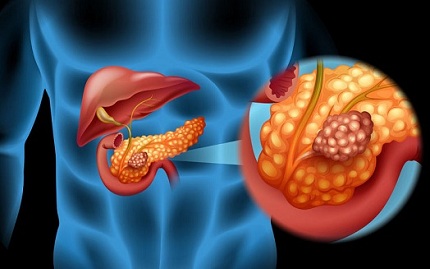
Typically pancreatic ductal adenocarcinoma (PDAC) is characterized by marked desmoplasia and drug resistance due, in part, to poor drug delivery to extravascular tumor tissue.
The study team report that carcinoma-associated fibroblasts (CAFs) induce β5 integrin expression in tumor cells in a TGF-β dependent manner, making them an efficient drug delivery target for the tumor-penetrating peptide iRGD. The capacity of iRGD to deliver conjugated and co-injected payloads is markedly suppressed when β5 integrins are knocked out in the tumor cells. Of note, β5 integrin knock-out in tumor cells leads to reduced disease burden and prolonged survival of the mice, demonstrating its contribution to PDAC progression. iRGD significantly potentiates co-injected chemotherapy in KPC mice with high β5 integrin expression and may be a powerful strategy to target an aggressive PDAC subpopulation.
The newly developed protocol represents the
latest cancer news and breakthrough that improves the lives of those inflicted with pancreatic cancer.
The study findings were published in the peer reviewed journal: Nature Communications.
https://www.nature.com/articles/s41467-021-21858-1
It is reported that every 12 minutes, someone in the United States dies of pancreatic cancer, which is often diagnosed late, spreads rapidly and has a five-year survival rate at approximately 10 percent. Treatment may involve radiation, surgery and chemotherapy, though often the cancer becomes resistant to drugs.
The research team showed how a tumor-targeting peptide, called iRGD, can sneak inside the armor that the tumor built to protect itself and use the fibrous tissue as a highway to reach deeper inside, destroying the tumor from within.
Unknown to many, the pancreas is a large gland located behind the stomach. It makes enzymes that aid digestion and hormones that regulate blood-sugar levels. Pancreatic ductal adenocarcinoma (PDAC) is a subtype of pancreatic cancer that is highly drug-resistant due, in part, by the hard shell-like outer layer surrounding the tumor.
Dr Tatiana Hurtado de Mendoza, PhD, first author and assistant project scientist at University of California San Diego School of Medicine and Moores Cancer Centre told Thailand Medical News, “This type of tumor is made up of a dense fibrous tissue that acts as a barrier to drugs trying to get through. Many drugs can reach the vessels of the tumor, but they are not able to get deep into the tissue, making treatment less effective, and that is one reason why this type of cancer is so challenging to treat."
&nbs
p;
She added, "Our study found that the tumor-penetrating peptide iRGD is able to use this fibrous network to deliver chemotherapy drugs deep into the tumor and be more effective."
The study team examined the microenvironment of PDAC tumors in a mouse model. They found that after targeting the tumor blood vessels, iRGD binds to high levels of β5 integrin, a protein produced by cells known as carcinoma-associated fibroblasts (CAFs) that produce much of the tumor's protective fibrous cover.
Dr Andrew Lowy, MD, co-corresponding author of the study, professor of surgery at University of California San Diego School of Medicine and chief of the Division of Surgical Oncology at Moores Cancer Center at UC San Diego Health commented, "We were able to closely replicate human disease in our mouse model and found that when iRGD was injected with chemotherapy in mice with high levels of β5 integrin, there was a significant increase in survival and a reduction in the cancer spreading to other organs in the body compared to chemotherapy alone. This could be a powerful treatment strategy to target aggressive pancreatic cancer,"
He added, "What is also exciting about this finding is the iRGD therapy did not produce any additional side effects. This is critically important when considering treatments for patients."
The study team said next steps include a national human clinical trial. They estimate the trial could begin in one year.
Dr Lowy further added, "The knowledge gained from our study has the potential to be directly applied to patient care. We also believe that the levels of β5 integrin within a pancreatic cancer could tell us which patients would benefit the most from iRGD-combination therapy."
For the
Latest Cancer News, keep on logging to Thailand Medical News.