Nikhil Prasad Fact checked by:Thailand Medical News Team Jul 21, 2025 1 year, 2 months, 2 weeks, 4 days, 12 hours, 32 minutes ago
Medical News: New research has uncovered why many people with Long COVID continue to suffer from lingering taste problems—especially with sweet, bitter, and umami flavors—months or even years after infection. Scientists from Uppsala University Hospital and Uppsala University in Sweden, along with colleagues from the Swedish University of Agricultural Sciences, University of Colorado School of Medicine in the USA, and University of Wisconsin-Madison, found that these taste issues are not due to physical damage to the tongue’s taste buds but rather to subtle changes in how certain taste-related cells function.
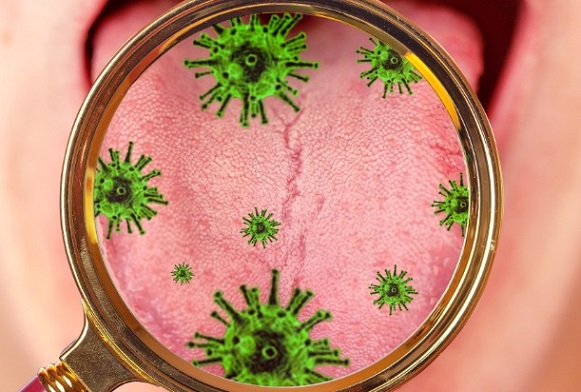 Ongoing Taste Loss After COVID-19 Raises Fresh Concerns
In this
Medical News report, researchers studied 28 adults who had never been hospitalized for COVID-19 but continued to report taste dysfunction for over a year. Using a taste test that measures the ability to detect sweet, salty, sour, bitter, and umami flavors, they discovered that while only a few had severely reduced overall taste, most had complete loss or reduced sensitivity to one or more taste types—especially sweet, umami, and bitter.
Why Only Certain Tastes Are Affected
The study revealed that sweet, umami, and bitter tastes depend on a specific group of cells known as Type II taste receptor cells. These cells use a signaling protein called PLCβ2. In many Long COVID patients, these cells appeared normal in structure under the microscope, but showed much lower levels of the key genes involved in taste signaling, especially PLCβ2 and TAS1R3. These genes are crucial for taste perception, and their reduced activity closely matched the taste test results of the participants.
Despite the loss of taste, biopsies taken from the tongue’s fungiform papillae showed that the overall structure and nerve supply of the taste buds remained intact. However, some participants had disorganized taste buds or scattered taste cells, suggesting that the virus may have altered the way these cells function rather than destroying them outright.
A Taste of Mystery Still Remains
Interestingly, the virus itself was not found in any of the tissue samples, even in people who still experienced symptoms. This suggests that the damage had already been done and could linger due to changes in the immune system or nerve signaling. One theory is that COVID-19 may cause long-term changes in the communication between taste cells and nerves or even trigger an ongoing immune response, much like what's been seen in the olfactory system with smell loss.
What This Means for Long COVID Patients
The research provides hope by showing that the tongue’s structure remains mostly undamaged, meaning therapies might help retrain or reactivate the taste cells. Understanding the specific loss of sweet, umami, and bitter senses—and how they relate to gene activity—can help doctors develop targeted treatments in the future.
The study findings were published on a preprint se
rver and are currently being peer reviewed.
https://www.biorxiv.org/content/10.1101/2025.07.17.661973v1
For the latest on Long COVID, keep on logging to Thailand
Medical News.
Read Also:
https://www.thailandmedical.news/news/long-covid-study-links-bitter-taste-loss-to-reduced-salivary-proteins
https://www.thailandmedical.news/news/zinc-and-steroids-show-potential-for-treating-long-covid-smell-and-taste-loss
https://www.thailandmedical.news/news/bitter-and-sweet-taste-receptors-tas1rs-and-tas2r38-genetic-variations-play-a-role-in-covid-19-symptoms-and-severity




 Share
Share
 Tweet
Tweet
 Share
Share