Phytochemicals and Herbs: Yet Another Study Finds That Flavanols And Proanthocyanidins From Plants And Fruits Can Inhibit SAR-CoV-2 Proteases
Source: Phytochemicals and Herbs Dec 03, 2020 5 years, 10 months, 1 week, 4 days, 18 hours, 20 minutes ago
Phytochemicals and Herbs: Scientists from North Carolina State University-U.S. in a new study have found that phytochemicals like Flavan-3-ols and Dimeric Proanthocyanidins from plants and fruits can inhibit the main SARS-CoV-2 protease called Mpro hence acting as antivirals against the novel coronavirus.
The study team reported that twelve phytochemicals, (–)-afzelechin (AF), (–)-epiafzelechin (EAF), (+)-catechin (CA), (–)-epicatechin (EC), (+)-gallocatechin (GC), (–)-epigallocatechin (EGC), (+)-catechin-3-O-gallate (CAG), (–)-epicatechin-3-O-gallate (ECG), (–)-gallocatechin-3-O-gallate (GCG), (–)-epigallocatechin-3-O-gallate (EGCG), procyanidin A2 (PA2), and procyanidin B2 (PB2), were selected for docking simulation.
The study findings showed that that all 12 phytochemicals could bind to Mpro. The affinity scores of PA2 and PB2 were predicted to be −9.2, followed by ECG, GCG, EGCG, and CAG, −8.3 to −8.7, and then six flavan-3-ol aglycones, −7.0 to −7.7. Docking characterization predicted that these compounds bound to three or four subsites (S1, S1′, S2, and S4) in the binding pocket of Mpro via different spatial ways and various formation of one to four hydrogen bonds. In vitro analysis with 10 available compounds showed that CAG, ECG, GCG, EGCG, and PB2 inhibited the Mpro activity with an IC50 value, 2.98 ± 0.21, 5.21 ± 0.5, 6.38 ± 0.5, 7.51 ± 0.21, and 75.3 ± 1.29 μM, respectively, while CA, EC, EGC, GC, and PA2 did not have inhibitory activities.
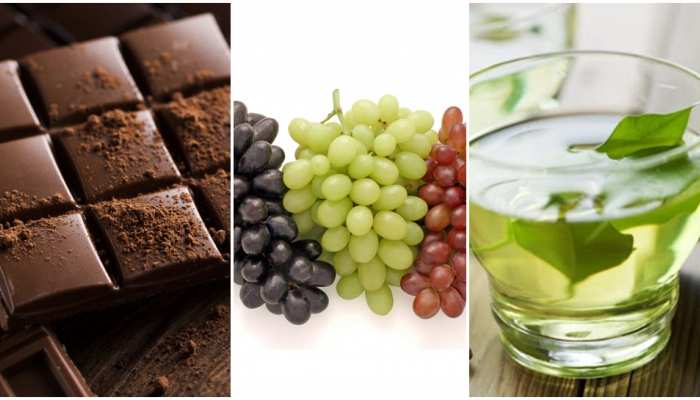
In order to further substantiate the inhibitory activities, extracts prepared from green tea (GT), two muscadine grapes (MG), cacao, and dark chocolate (DC), which are rich in CAG, ECG, GAG, EGCG, or/and PB2, were used for inhibitory assay.
The findings showed that GT, two MG, cacao, and DC extracts inhibited the Mpro activity with an IC50 value, 2.84 ± 0.25, 29.54 ± 0.41, 29.93 ± 0.83, 153.3 ± 47.3, and 256.39 ± 66.3 μg/ml, respectively.
The study findings indicate that on the one hand, the structural features of flavan-3-ols are closely associated with the affinity scores; on the other hand, the galloylation and oligomeric types of flavan-3-ols are critical in creating the inhibitory activity against the Mpro activity.
The study findings were published in the peer reviewed journal: Frontiers In Plant Science.
https://www.frontiersin.org/articles/10.3389/fpls.2020.601316/full
The study team said that phytochemical compounds in foods or beverages like green tea, muscadine grapes, and dark chocolate can bind to and block the function of a particular enzyme, or protease, in the SARS-CoV-2 virus.
According to Dr De-Yu Xie, Professor of plant and microbial biology at North Carolina State University and the corresponding author of the study, proteases are important to the health and viability of cells and viruses. If proteases are inhibited, cells cannot perform many important functions including replication, for exam
ple.
Dr Xie told Thailand Medical News “One of our lab’s focuses is to find phytochemicals in plants and herbs that inhibit either how a virus attaches to human cells or the propagation of a virus in human cells,”
For the research, the study team performed both computer simulations and lab studies showing how the so-called “main protease” (Mpro) in the SARS-CoV-2 virus reacted when confronted with a number of different plant chemical compounds already known for their potent anti-inflammatory and antioxidant properties.
Dr Xie added, “Mpro in SARS-CoV-2 is required for the virus to replicate and assemble itself. If we can inhibit or deactivate this protease, the virus will die.”
Computational docking simulations showed that the studied chemical compounds from green tea, two varieties of muscadine grapes, cacao powder and dark chocolate were able to bind to different portions of Mpro.
Dr Xie further added, “Mpro has a portion that is like a ‘pocket’ that was ‘filled’ by the chemical compounds. When this pocket was filled, the protease lost its important function.”
Further in vitro lab experiments completed by Dr Yue Zhu, an North Carolina State Ph.D. student in Dr Xie’s lab, showed similar results.
The phytochemical compounds in green tea and muscadine grapes were very successful at inhibiting Mpro’s function; chemical compounds in cacao powder and dark chocolate reduced Mpro activity by about half.
Dr Xie said, “Green tea has five tested chemical compounds that bind to different sites in the pocket on Mpro, essentially overwhelming it to inhibit its function. Muscadine grapes contain these inhibitory chemicals in their skins and seeds. Plants use these compounds to protect themselves, so it is not surprising that plant leaves and skins contain these beneficial compounds.”
In conclusion, both docking simulation and in vitro assay showed that (–)-catechin-3-O-gallate, procyanidin B1 and B2 inhibited the Mpro activity of SARS-Cov-2. Moreover, these compound-rich extracts of green tea, muscadine grape, cacao, and dark chocolate also inhibited the Mpro activity. Given that there is not an effective medicine for the treatment of COVID-19 and not a vaccine for preventing against the SARS-Cov-2 infection and transmission, these data recommend that these phytochemical compounds and extracts of green tea, grape, and cacao can be utilized to interfere the devastation of SARS-Cov-2.
Most of these phytochemicals can be found in Thailand Medical News Therapeutic Teas that were specially formulated from a variety of herbs and phytochemicals to act as a prophylaxis and therapeutic agent for COVID-19.
https://www.thailandmedical.news/news/new-therapeutic-teas-
For more on
Phytochemicals and Herbs to treat COVID-19 and Long COVID, keep on logging to Thailand Medical news or check out:
https://www.thailandmedical.news/articles/covid-19-herbs