Source: Thailand Medical News Oct 27, 2019 6 years, 8 months, 6 days, 9 hours, 50 minutes ago
Neuromodulation, including vagus nerve stimulation, has potential to prevent trauma deaths
Feinstein Institutes for Medical Research scientists have completed a study involving
bioelectronic medicine strategies to treat
Hemorrhagic Shock (HS) and the positive findings of the study has been published in the
Springer Nature journal, Bioelectronic Medicine.
 Hemorrhagic shock
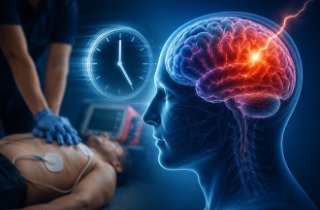
 (HS) occurs when the body's cardiovascular system begins to shut down due to large amounts of blood loss. Injuries that involve heavy bleeding may lead to HS if the flow isn't stopped immediately.
Hemorrhagic Shock accounts for approximately 40 percent of deaths after sustaining a trauma, with up to half of those deaths occurring before the patient reaches a medical facility.
Typically, intravenous (IV) fluid therapy and blood transfusions are the cornerstones of treating
Hemorrhagic Shock. However, these options may not be available immediately after injury, resulting in death or a poorer quality of survival. Furthermore, blood transfusions are typically not available in combat zones or remote areas. To better manage treatment for
Hemorrhagic Shock patients, improved strategies are needed.
Feinstein Institutes researchers, including Dr Chunyan Li, PhD, assistant professor at the Institute of
Bioelectronic Medicine at the Feinstein Institutes, have been studying
neuromodulation, which involves stimulating the nervous system to excite, inhibit or otherwise modify neural activity.
Dr Chunyan Li, author of the study, in a phone interview with
Thailand Medical News commented,"For a patient who sustained a trauma,
hemorrhagic shock is a serious condition that could quickly lead to the patient dying. More than 60,000 Americans die each year from hemorrhage, and about 780,000 globally and new advances in
bioelectronic medicine particularly
neuromodulation have the potential to save many of these lives."
Dr. Li and her colleagues conducted an extensive review of
neuromodulation therapies, including trigeminal nerve stimulation (TNS), vagus nerve stimulation (VNS), phrenic nerve stimulation (PhNS) and electroacupuncture (EA). They note that these techniques could provide hemorrhage control and be lifesaving.

ot;" src="https://www.thailandmedical.news/uploads/editor/files/Neuromodulation.jpg" style="height:239px; width:350px" />
Dr. Chunyan Li, Asst Professor, Feinstein Institutes for Medical Research
For instance, VNS, TNS, or EA could attenuate the immune response and reduce the need for
antibiotics, which avoids the ever-increasing issue of antibiotic resistance and antimicrobial treatment failures, particularly in the fight against sepsis. TNS also shows signs of reducing the rate of blood loss in the body so that a patient may avoid a blood transfusion and its associated complications. These therapies could also be refined to work through the skin vs. having to be implanted, which leaves a wide range of future applications and mobility possibilities open for development.
Dr Ping Wang, chief science officer at the Feinstein Institutes further commented to
Thailand Medical News "Dr. Li and her team comprising of Keren Powell, BA; Dr. Kevin Shah; Caleb Hao; Yi-Chen Wu, MS; Aashish John; and Dr. Raj K. Narayan, have done a great job summarizing the most recent findings on life-saving solutions as it relates to
hemorrhagic shock."
Reference: Neuromodulation as a new avenue for resuscitation in hemorrhagic shock
Keren Powell, Kevin Shah, Caleb Hao, Yi-Chen Wu, Aashish John, Raj K. Narayan & Chunyan Li
Bioelectronic Medicine volume 5, Article number: 17 (2019)
https://bioelecmed.biomedcentral.com/articles/10.1186/s42234-019-0033-z