Medical Controversy: Are HPV Vaccines Really Effective As All Past Studies Had Methodological Flaws
Source: Thailand Medical News Jan 22, 2020 6 years, 8 months, 3 weeks, 19 hours, 14 minutes ago
A recent analysis of the clinical trials of
HPV vaccines to prevent
cervical cancer raises doubts about the
vaccines' effectiveness. The findings of the analysis, published by the
Journal of the Royal Society of Medicine, assessed 12 published Phase 2 and 3 randomised controlled efficacy trials of the
HPV vaccines Cervarix and
Gardasil.
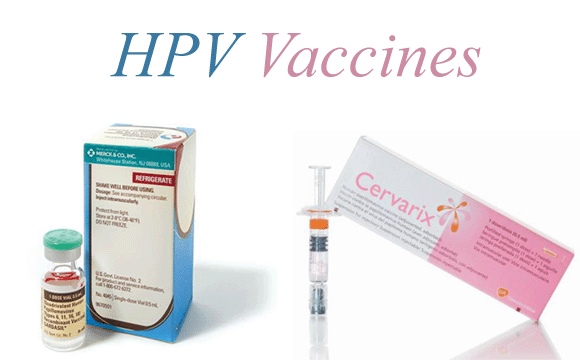
The detailed analysis, carried out by researchers at Newcastle University and Queen Mary University of London, revealed many methodological problems in the design of the Phase 2 and 3 efficacy trials, leading to uncertainty regarding understanding the effectiveness of
HPV vaccination.
The medical researchers found that the trials were not designed to detect
cervical cancer, which takes decades to develop. Females in the trials were followed up for six years or less, apart from one trial extension to just under nine years. While the researchers found evidence that
vaccination prevents low grade abnormal cell changes, they said this is not clinically important because no treatment is given.
Dr. Claire Rees from Queen Mary University of London and the lead researcher of the study, told
Thailand Medical News via a phone interview, "Trials may have overestimated efficacy by combining high-grade
cervical disease with low-grade
cervical changes that occur more frequently but often resolve spontaneously without progressing. We found insufficient data to clearly conclude that
HPV vaccine prevents the higher-grade abnormal cell changes that can eventually develop into
cervical cancer."
She further added: "Abnormal cell changes are likely to have been overdiagnosed in the trials because
cervical cytology was conducted at 6-12 months rather than at the normal screening interval of 36 months. This, too, means that the trials may have overestimated the efficacy of the vaccine, again because some of the lesions would have regressed spontaneously."
The medical researchers also found that the trial populations had limited relevance and validity for real world settings. The women in the trials were older than the target population.
Still calling for women to still attend regular
cervical screening, co-author of the study, Professor Allyson Pollock, of Newcastle University, said: "We have good evidence that cervical screening significantly reduces the risk of
cervical cancer in women regardless of whether they have been
vaccinated."
Reference: Claire P Rees et al, Will HPV vaccination prevent cervical cancer?, Journal of the Royal Society of Medicine (2020).
https://dx.doi.org/10.1177/0141076819899308" target="_blank">DOI: 10.1177/0141076819899308